

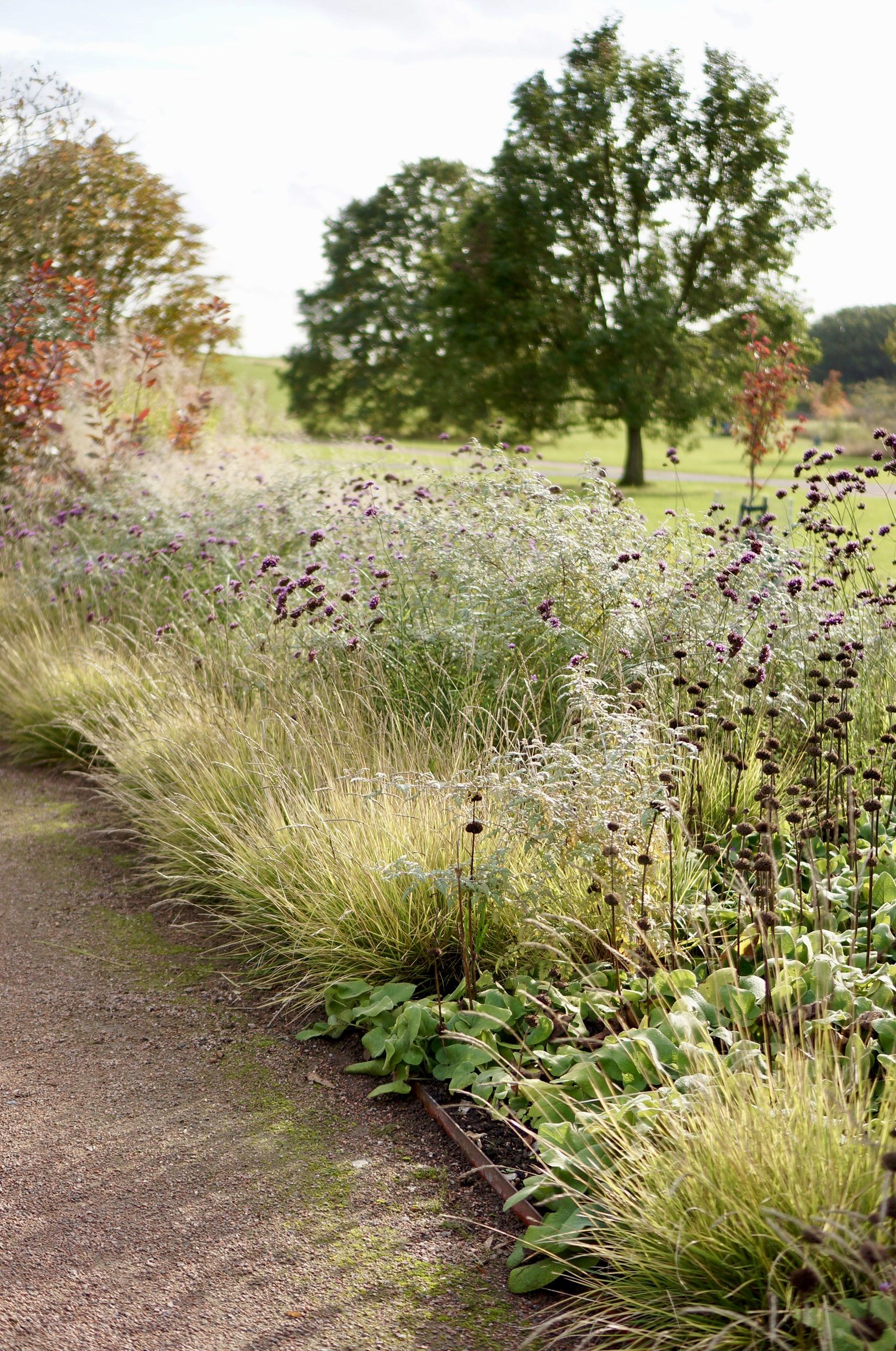
Once upon a time, the blueprint for a beautiful garden was all about precision. Rows and rows of neatly preened bushes and perfectly plucked flowers, not a leaf out of place. It was a marker of sophistication to have forced nature to follow order, a symbol of your dedication to aesthetic perfection. But nowadays, we’re adopting quite a different approach in our outdoor areas.
As so often happens with trends, the pendulum has swung the other way, and the trendiest gardens in 2026 are those that look more like a wild forest than they do the gardens of Versailles. The gardens of today are all about embracing the wild ruggedness of nature. Grass grows at lengths previously unforeseen, and rainbow-colored patches of wildflowers adorn the ground. There’s beauty in the abundance, and it can only happen once you relinquish control.
It’s a handover of power. We’re no longer attempting to force nature to fit our aesthetic mold. Instead, we’re taking a step back, allowing nature to do what it does best. A little overgrown, and all the better for it. This is the year of the overgrown garden, and we hope this garden trend is here to stay.
Article continues below
Why the Overgrown Look Is In

This trend takes after the naturalistic planting style, which grew in popularity after the Industrial Revolution.
(Image credit: East London Garden Design)
While trends can be taken at face value, more often than not, when you pay a bit of attention, you’ll quickly find a complex, social motivation that’s acting as the driving force behind every trend that enters the spotlight — and this latest one is no different.
If there’s one thing that has dominated the social consciousness over the past few years, it’s the ascent of AI. As our lives become more and more intertwined with the digital world, we’re increasingly searching for things that feel entirely untouched by technology. It’s why we all become obsessed with the drawn-on decor trend and all things biophilic design. And what could be more removed from technology than nature itself?
This is exactly what Stephanie Adams, from The Eden Brothers, had noticed, too. “We’ve noticed a quiet rebellion happening in gardens everywhere,” she notes.
Now more than ever before, people are searching for a sense of undeniable authenticity in their gardens. “People are craving something unscripted,” she tells me, “A space that inspires creativity, changes with the seasons, and doesn’t need to be managed but instead joyfully observed.”
In a world where all friction is slowly being erased in exchange for seamless optimization, unpredictability and imperfection have become a novelty, and one we’re desperate to embrace. An overgrown garden is a symbol of nature’s power, of how the world has existed before we were here and will continue to once we’re gone.
And while these exact circumstances may feel unique, this is just another case of history repeating itself. As Stephanie explains, “When the Industrial Revolution mechanized daily life, it pulled people away from handwork, the land, and from anything that moved at a human pace. This caused a natural counter-pull; William Robinson and Gertrude Jekyll responded with a case for gardens that felt alive and intuitive rather than controlled.” Happening alongside the Arts and Crafts movement, this new style of garden was all about wild, naturalistic planting, not dissimilar to the overgrown gardens we’re seeing today.
“The throughline is simple: when life gets more systemized, people reach for something that grows on its own terms,” argues Stephanie.
How to Get the Look

Build dimension by scattering planters and pots throughout your garden, too.
(Image credit: Casper Farrell. Woodhouse and Law)
As effortless as this trend looks, there’s still a certain amount of thought and intention that goes behind achieving it. Plus, there’s a fine line between overgrown and just plain messy, and knowing how to strike the right balance is the secret to success.
To stop your space from slipping into a place of pure mess, make sure you’ve got some sort of structural framework as your foundation: “This might be something as simple as mown paths cutting through looser planting, clipped hedging that provides a sense of boundary, or clearly defined bed lines that gently contain the ‘wild’ planting borders,” suggests Gina Taylor, from East London Garden Design.
You may also find it helpful to create structure with hardscaping materials, too. This could look like a simple stone edging, a gravel garden path, or a full paved patio. The contrast of wild nature against these more uniform, solid materials can help to stop your garden from feeling unruly.
Once you have some sense of structure to work with, you can begin to build up the heart of this design, which, according to Gina, is all about layering. “Instead of planting in neat rows, aim for a dense, interwoven mix of plants with varying heights, textures, and forms: low growers at the front, looser mid-height perennials, and taller, more transparent species drifting up through the scheme,” she suggests. “This creates a soft, immersive effect where everything overlaps and reveals itself gradually,” she explains.
Allowing your plants to mingle and interweave with one another creates depth and a true fairytale garden effect.
Part of this trend is about relinquishing control and allowing nature to run its course. But there are certain things you can do to help this process move along. For example, Gina suggests a more relaxed spacing between plants, so there’s enough room for them to self-seed, which will help your modern garden to evolve naturally over time.
Don’t make the mistake of assuming you need to include as many different plants as possible, though. As Gina explains, “Plant repetition is what keeps it all feeling intentional: repeating a few key plants in groups throughout the border helps create rhythm and cohesion.” And to keep the borders from feeling too harsh, try allowing the plants to gently flow over, onto the paths, creating a feeling of abundance.
The ‘overgrown’ garden shouldn’t mean abandoned, either. “Editing is just as important as planting,” says Gina. “Regularly removing anything that looks tired, [actually] overgrown, or out of place helps maintain a sense of intention even within a relaxed design. It’s less about constant tidying and more about selective restraint: leaving some seed heads, allowing plants to lean and intermingle, and embracing a bit of seasonal imperfection all contribute to the atmosphere, but the overall aim is ‘curated wildness’ rather than true neglect.”
Gina Taylor
East London Garden Design is a multi award-winning garden design studio based in East London, founded and led by garden designer Gina Taylor. As a garden designer in East London, Gina works with homeowners across London to create thoughtful, bespoke gardens designed for modern city living. By combining garden design, horticulture, architecture, and creative landscaping, she aims to create outdoor spaces that feel natural, balanced, and suited to your lifestyle.
What Plants to Use in Your Overgrown Garden

For a more sustainable design, research the best plants for your local ecosystem.
(Image credit: East London Garden Design)
We’ve already established that planting in layers is the key to this design, but what exactly you plant within those layers is what will make all the difference.
To start with, Stephanie recommends relying on perennials as the base. “They come back fuller every year, deepen their roots, and largely take care of themselves; they’re a genuine long-game investment,” she explains.
From there, she says, “Layer in grasses as a backdrop, add a wildflower mix to fill gaps and bring that colorful, unscripted meadow quality, and then resist the urge to tidy everything away at season’s end.”
Gina adopts a similar approach, relying on perennials to build a structural base, which she then builds upon. Some favorites include “Salvia nemorosa, Nepeta, and Geranium ‘Rozanne’, and Echinacea purpurea.” From there, ornamental grasses are added, bringing a softness and sense of movement to the landscape. She recommends “Stipa tenuissima, Molinia caerulea, and Panicum virgatum” for their loose, flowing quality.
To ensure there are no harsh lines and edges, Gina adds in some self-seeding plants around the border, too. “Self-seeding plants like Foxgloves (Digitalis purpurea), Aquilegia vulgaris, and Nigella damascena help blur the edges of the design, giving it that effortless evolving feel over time,” she says.
Different plants will bring different things to your design, and finding a balance between their qualities will enhance the overall effect of your space. It’s also important to consider the local ecosystem in your design and choose plants accordingly. For example, Stephanie says, “Standing stems shelter wildlife through winter and feed the soil as mulch. Enjoying and observing the whole life cycle is the point.”

Little Toller Books
The Wild Garden
Originally published in 1870, in this book, William Robinson offers his revolutionary rejection of the Victorian tradition, setting up a new standard for a naturalistic approach to gardening.

niwaki
Japanese Vegetable and Herb Seeds
Not only will these vegetables and herbs look gorgeous in your garden, but they’ll also leave you with lovely fresh produce for you to make use of.

Unwins
Unwins Easy Wildflower 1.2kg Box
Wildflowers don’t just fill your garden with color and beauty, they also help support your local eco-system. I call that a win-win.
If you love the slightly rough-around-the-edges, unkempt look, I reckon you’ll be a fan of the messy gardening trend. It’s not dissimilar to this, though the approach is slightly different.
For more design ideas and inspiration for your garden and beyond, subscribe to our newsletter, and all the latest will be delivered directly to your inbox.
