

From evergreen olives to the more trend-led shades like chartreuse, green is a beloved color that works well in pretty much any home, any style, any space. But, in 2026, there are certain ways of using it that have started to look a bit dated and predictable. It’s not overdone, designers confirm, it’s just about how you use it.
Beyond turning to the latest green color trends, the impact green has on an interior, and how the rest of the space is designed around it, is key to keeping things feeling fresh.
Below, designers share the stylish ways they’re decorating with green right now, to create spaces that feel design-forward and elevated, as well as warning what ideas to ditch when it comes to nature’s favorite color.
Article continues below
1. Choosing Gray-Toned Green Paints
For designer Rachael Gowdridge, the green paint colors to avoid are those with too much gray in them. “For a long time, they were the default because they felt safe and easy, but many can now feel a little tired, especially when paired with cooler contemporary finishes,” she explains. “They often lack the depth that makes green feel fresh.”
Instead: Use Warm-Hued Green Paints

In this bedroom, the joinery was painted with Little Greene’s Boxington, described by Rachael as a “brighter, more characterful green that feels fresh and uplifting rather than muted or overly safe”.
(Image credit: Christopher Horwood. Design: Rachael Gowdridge)
For a more stylish and welcoming feel, turn to richer and warmer green paints. “I’d always lean towards greens with more pigment and complexity: something with olive, brown, or yellow undertones tends to feel richer, softer, and ultimately more enduring,” says Rachael.
The best green paints, Rachael advises, use a bold approach for a modern look, as shown in the bedroom pictured above. “We used it with intention, carrying the color confidently across the full joinery so it reads as architectural rather than accent-driven,” she says. “It allows the green to feel bold, but still considered.”

Little Greene
Boxington 84
Warm green paints like Little Greene’s Boxington feel happy and welcoming.

Rachael is an award-winning interior designer with over 13 years’ experience in high-end hospitality and residential design. After working at Martin Brudnizki Design Studio and Ennismore International, she founded her eponymous studio in 2021. Known for her layered, characterful approach, Rachael collaborates closely with artisans and craftspeople to create bespoke, timeless interiors.
2. Pairing Dark Green With Bright White
Knowing what colors go with green is key to a stylish space. According to designer Gemma Tucker of London-based Balance Interior Design, bright white is one to avoid when decorating with dark green. “Very dark greens set against stark white ceilings and woodwork can read as cold and dated — the sharp delineation disrupting the sense of cohesion,” she says.
Instead: Add Soft Contrast With Warm Neutrals

In this snug room, dark green feels immersive and cocooning alongside warm brown tones.
(Image credit: Max Trafford. Design: HollandGreen)
Instead of adding bright white to your dark green decor, create a softer look with warm neutrals. “Introducing gentle contrast with warmer accents like rust, terracotta, or clay adds depth and warmth, preventing the palette from feeling overly subdued,” Gemma explains.
The same applies when choosing paint colors: those that don’t create too much contrast when used alongside one another will feel softer and easier on the eye. “Pairings such as Little Greene’s Light Bronze Green with Travertine create a calm, neutral scheme, while Paint & Paper Library’s The Botanist with Paarl offers a fresher, more lifted interpretation,” Gemma says.

M&S
Chenille Geometric Jacquard Fringed Cushion
Complement green walls with earth tones, such as the rich ochre of this fringed cushion.
3. Not Adding Enough Contrast
While dark green with bright white can feel too harsh, contrast in interior design is also important, especially if your scheme is just different shades of green. “One of the most common mistakes I see when decorating with green is using too many similar tones together without introducing enough contrast,” says Studio Raymond founder, Carina Raymond. “While it might feel cohesive in theory, in reality, it can become quite oppressive and one-dimensional.”
Designer Elana Tenenbaum Cline of Connecticut-based Carta Creatives agrees. “When everything is the same shade of green, the room can quickly feel flat or themed, rather than layered and sophisticated,” she says.
Instead: Layer Colors and Textures to Add Interest

This living room feels fresh and modern with the light and dark contrasting tones.
(Image credit: Rachael Smith. Design: Studio Raymond)
To keep your green scheme feeling balanced, make sure to layer in richer tones and lighter accents. “Green is a color that really comes alive through contrast, texture, and tonal variation,” says Elana.
While white can feel too harsh set against incredibly dark shades of green, it can add the right amount of freshness to mid-tones. “Crisp whites and soft creams were key in keeping the scheme feeling fresh and light, while warmer tones like mustard, terracotta, and soft pinks introduced a sense of depth and softness that stopped the green from feeling too stark or traditional,” Carina says of the modern living room pictured above.

H&M
Linen-Blend Table Lamp
To lift your green scheme and make it feel modern, add decor in lighter tones, such as this textured lamp.

Studio Raymond is a London-based interior design studio founded by Carina Raymond, known for creating layered, characterful interiors that balance color, texture, and architectural detail. With a focus on thoughtful spatial design and materiality, the studio delivers refined, liveable spaces that feel both timeless and quietly distinctive.
4. Using Overly Acidic, Lime Greens
Along with gray-toned greens, designers are also cautious about using sour greens, which can be tricky to get right. “Lime greens can feel quite harsh and unforgiving,” says London-based interior designer Lucy Van Der Gucht.
The design duo Kilian Camp and Alison Green of California-based Élan Design House also recommend a considered approach when choosing shades of green: “Avoid overly bright or dated tones like grass, lime, or seafoam greens, which can feel jarring or impractical in everyday spaces.”
Instead: Turn to More Complex, Nuanced Shades

The dark green color of these kitchen cabinets is grounding and timeless, reading almost like a neutral.
(Image credit: Chris Snook. Design: Lucy Van Der Gucht)
When choosing shades of green, especially paint colors, those with interesting undertones that feel inspired by the natural world can be a lot more livable and timeless. “Green should have a certain complexity to it,” says Lucy.
When discussing greens that have earthy undertones, she says that they “respond to light in a much more interesting way, which helps a space feel layered rather than static.”

Farrow & Ball
Sap Green No. 199
Sap Green is a rich yet earthy shade that offers a more timeless look than anything too bright.
5. Forgetting to Add Something Unexpected
When a room is designed too cautiously, from sticking to a palette of neutral accents to forgetting about pattern, it can feel uninspiring. “Green is such a versatile color, but one of the most common mistakes is treating it too safely,” says interior designer Laura Stephens.
“I often see deeper greens, like olive or moss, paired only with muted neutrals, which can leave a scheme feeling a little flat or lifeless,” she continues. “These tones really benefit from contrast; without it, they can lack energy and depth.”
Instead: Use Complementary Colors and Pattern

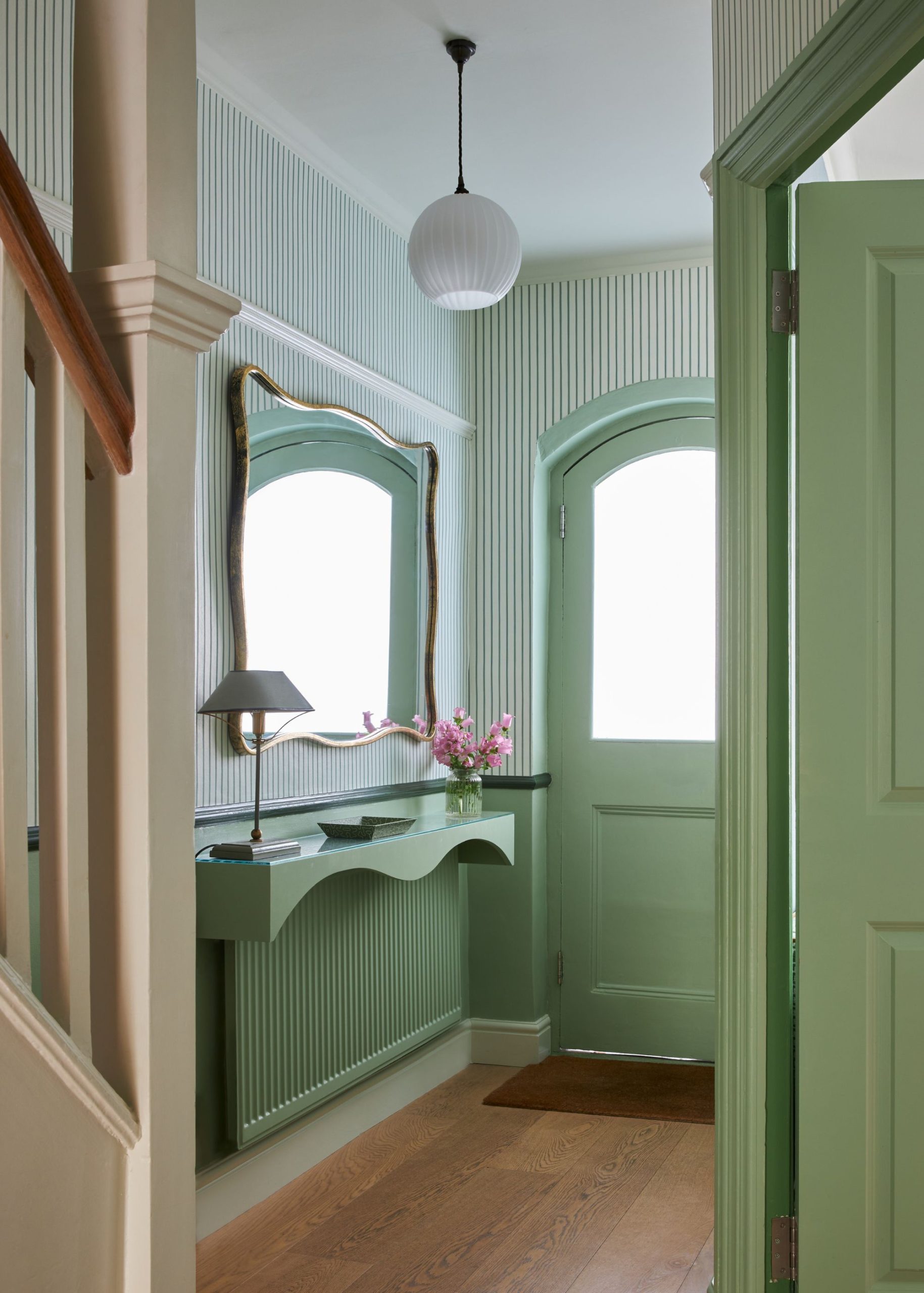
The striped wallpaper in this entryway adds interest and movement for a design-forward look.
(Image credit: Boz Gagovski. Design: Laura Stephens)
To keep green feeling exciting and design-forward, layer patterns and complementary accent colors (warm reds or pinks). “In this hallway, we used a ticking stripe wallpaper that incorporates green alongside other tones, which immediately adds movement and softness,” says Laura. “The contrast between the pattern and the solid color helps to give the space depth and character, rather than it feeling too uniform.”
When adding brighter, more unexpected colors to your scheme, don’t be afraid to go bold. “A strong olive green can feel quite heavy alongside certain neutrals, so I might introduce a rich red or even a cobalt blue to lift it and create a more dynamic palette,” Laura explains. “It’s about giving the eye somewhere to travel.”

Sanderson
Aperigon Parade Wallpaper
As inspired by this entryway, this striped wallpaper would help to break up an all-green scheme.

Laura Stephens is a celebrated British interior designer renowned for her vibrant and versatile approach to creating elegant, timeless spaces. Known for her ability to seamlessly combine bold patterns, rich textures, and a masterful use of color, Laura crafts interiors that feel both sophisticated and inviting. Her signature aesthetic is rooted in a deep understanding of proportion, balance, and harmony, creating rooms that are as functional as they are beautiful.
6. Using Green as an Accent Color
Long gone are the days of accent colors, especially accent walls, which can easily look non-committal and dated. “What’s important is that green isn’t used in isolation — it’s repeated and reinterpreted throughout the scheme in different finishes and intensities,” says Laura Stephens. “This layering makes the space feel cohesive but not overly matched, which is key to achieving a more timeless look.”
Instead: Repeat Green Throughout a Space

Benjamin Moore’s Urban Nature, a warm and welcoming green paint, was used on the cabinets here.
(Image credit: Nicole Dianne Photography. Design: Kristen Elizabeth Design)
Rather than using green in just one place, layer it throughout your room to create a modern look. In this kitchen, soft green kitchen cabinets are teamed with a green patterned wallpaper, which brings continuity and makes the palette feel considered, while the complementary orange tones add interest.
“By honoring green for what it is and leaning into the natural shades found in nature, especially those surrounding the specific home’s outdoor environment, you can seamlessly add it into any style of home,” says designer Nastassja Bowman of Kristen Elizabeth Design. “Pairing green with its natural counterparts makes the design inherently timeless.”

Benjamin Moore
Urban Nature AF-440
Use this soft and welcoming green paint to color-drench a room for a contemporary look.
7. Using Insipid Pastel Greens
While pastel green can be a fun choice, for some designers, it’s not the most timeless and can soon date a room. Plus, pale tones like mint green can fail to add enough depth to a room, something that’s important to ensure balance. “We’re embracing nourishing, deep greens, rather than the Instagram-ready pastels inspired by candies, gummies, and, unforgettably, mint,” say the designers Sarah Goesling and Rebecca Goesling of Goesling Group.
Instead: Add Depth to a Room With Rich Tones

Dark shades of green are perfect for creating a moody feel, especially in small or low-light rooms.
(Image credit: Ryan McDonald. Design: Goesling Group)
Rich greens can add so much depth to a room, while also creating a cozy, cocooning feel. When used liberally in a small space, such as a bathroom or snug room, it brings drama — a stylish alternative to neutrals.
When using a dark tone like this one, turn to natural materials to keep it feeling warm and welcoming. “Pair olive, moss, sage, or deep forest tones with layered textures, warm woods, patinated metals, and a mix of old and new pieces,” suggests Elana Tenenbaum. “That keeps the scheme feeling design-forward, but still relaxed, livable, and rooted.”

Piglet in Bed
Olive Green Fringe Edge Cotton Towels
If you’re going for green walls in a bathroom, continue the palette with these olive towels with a fun fringe edge.
With a considered approach, green is as stylish as ever. For more inspiration for making shades feel fresh, tune in to the latest color trends for 2026.
And to get design news delivered straight to you, make sure you’ve subscribed to Livingetc’s newsletter.
