

I always go to Chelsea Flower Show looking for newness, inspiration, and fresh perspectives on how we see and experience nature, and the 2026 show did not disappoint. While the beauty of classic flowers and traditional planting remained central throughout, what I particularly loved this year was the growing influence of design within floristry itself, and with this, the use of color.
Across the show, floral displays became increasingly sculptural, immersive, and installation-led. Flowers, plants, and natural materials were arranged with far more architectural thinking, creating environments rather than simply decorative displays. Alongside fresh blooms, some of the most striking spaces incorporated dried flowers, dead plant matter, seed heads, charred wood, volcanic rock, and burnt natural surfaces, introducing a rawness and material contrast that felt highly contemporary.
Garden color trends also played a far more immersive role throughout the show. Rather than appearing as isolated floral highlights, palettes were built tonally and atmospherically, with entire spaces immersed in singular color stories or highly saturated harmonies. From mineral peaches and volcanic blacks to hyper-real pinks and sun-heated oranges, color was used to shape depth, contrast, and spatial experience in a much more design-led way.

These juxtapositions etween life and decay, softness and structure, brightness and darkness created some of the show’s most memorable moments, setting the garden trends for this year, while still remaining deeply connected to the natural world.
The result was a Chelsea Flower Show that felt not only botanical, but increasingly design-driven, sensory, and visually immersive.

A pivotal figure at the Pantone Color Institute, Jane contributes to trend publications and serves as the European Creative Director for Pantone’s Interiors annual trends publication, Pantone View Home and Interiors. Her approach to forecasting color focuses on observing current events and cultural trends to understand how perceptions of color are evolving.
1. Sunset Glow

Sharp oranges and glowing yellows were balanced with acid greens, violet accents, and flashes of hot pink, creating heightened contrast throughout the displays.
(Image credit: STUDIOBODDY)
This color trend focused on rich harmonies rather than a single dominant shade, blending burnished orange, saffron yellow, kumquat, marigold, solar lime, coral, and softened flame tones into layered floral compositions. Across tropical planting, suspended floral installations, and sculptural arrangements, color was used in a highly saturated and immersive way.
What felt especially new was the intensity and complexity of the layering. Rather than soft summer florals, arrangements combined exotic tropical flowers, architectural stems, unusual seed heads, and brightly colored botanical forms to create compositions that felt explosive and constantly moving.
The palette often referenced heat, sunlight, spice, and tropical landscapes, while unusual flowers such as pitcher plants, gloriosa lilies, heliconias, and allium forms introduced sculptural silhouettes and exaggerated shape.
The overall atmosphere felt energetic, radiant, and highly visual, with color appearing almost illuminated through dense layering, suspended movement, and dramatic floral scale.

Rugvista
Indoor outdoor rug
2. Plant Noir

Across displays, black appeared matte, mineralized, and heavily textured, bringing density and visual weight to the planting.
(Image credit: STUDIOBODDY)
Black emerged as one of the season’s most directional and unexpected floral directions, moving beyond accent usage to become a complete atmospheric statement. Charred wood, volcanic rock, burnt plantings, blackened tree forms, and deep, shadowed foliage created environments inspired by lava fields, scorched landscapes, and raw, elemental terrain.
What felt especially new was the embrace of destruction, decay, and darkened natural surfaces as part of the aesthetic. Burnt palms, carbon-like textures, dried seed heads, and black sculptural planting were presented with architectural precision rather than hidden away.
Color within the story became highly controlled. Deep espresso, charcoal, ash, obsidian, tobacco brown, and volcanic black sat beside small injections of acid orange, mineral yellow, and muted botanical color, allowing brighter planting to appear intensified against the darkness.
Unusual black plant species also reinforced the direction, particularly striped orchids and exotic tropical flowers whose graphic markings introduced contrast and a slightly surreal quality. Combined with volcanic forms, burnt textures, and sculptural silhouettes, Plant Noir became one of the season’s most visually immersive and dramatic landscape directions.

Habitat
Steel Garden Rocking Chair
3. Contemporary Peach

The direction appeared across sculptural fungi formations, flowering bonsai displays, azalea planting, and softly mineralized floral environments.
(Image credit: STUDIOBODDY)
This emerged as a singular floral color statement, where peach, coral, apricot, and softened blush tones appeared confidently on their own rather than blending into larger multi-colored arrangements.
What felt especially new was the shift away from decorative sweetness toward something more sculptural and atmospheric. Peach tones moved through rippled mushroom textures, clustered petals, and carefully pruned flowering forms, creating surfaces that felt organically constructed rather than traditionally floral.
The palette moved between glowing coral, shell pink, soft salmon, faded nectarine, and mineral peach, often carrying an earthy undertone referencing clay, sandstone, weathered minerals, and sun-faded pigments.
Tonal layering was key to the atmosphere, particularly in the colors that were paired with peach. Soft peach florals sat against moss, bark, dark evergreen foliage, and neutral mineral surroundings, allowing the color to glow with greater depth and clarity. Across bonsai environments in particular, peach introduced softness into highly controlled sculptural planting, positioning coral and peach as one of the season’s most refined floral color stories.

Amazon
Outdoor Floor Cushion
4. Faded Botanical

Rather than tightly structured floristry, arrangements felt looser, more organic, and heavily layered, with trailing forms, suspended flowers, and aged botanical surfaces that created immersive environments referencing dried landscapes, preserved gardens, and natural-material archives.
(Image credit: STUDIOBODDY)
Vintage-inspired florals emerged with a softened, timeworn quality that balanced dried flowers, seed heads, faded foliage, and fresh botanical elements within heavily layered arrangements. Tea rose pinks, parchment creams, dusty peach, muted olive, tobacco brown, faded orange, and softly aged greens created palettes that felt weathered and naturally sun-faded.
What felt especially new was the way decay and preservation became part of the visual language. Dried grasses, suspended botanical installations, straw textures, bleached foliage, and faded floral heads were used alongside fresh flowers and orchids, creating contrast between fragility and growth.
The garden color trend itself appeared dusted down and mineralized rather than bright or decorative. Banksias, dried seed pods, hanging foliage, faded orchids, and naturally ageing plant materials introduced texture, irregularity, and tonal softness throughout the displays.

Sostrene Grene
Reusabe Outdoor Plates
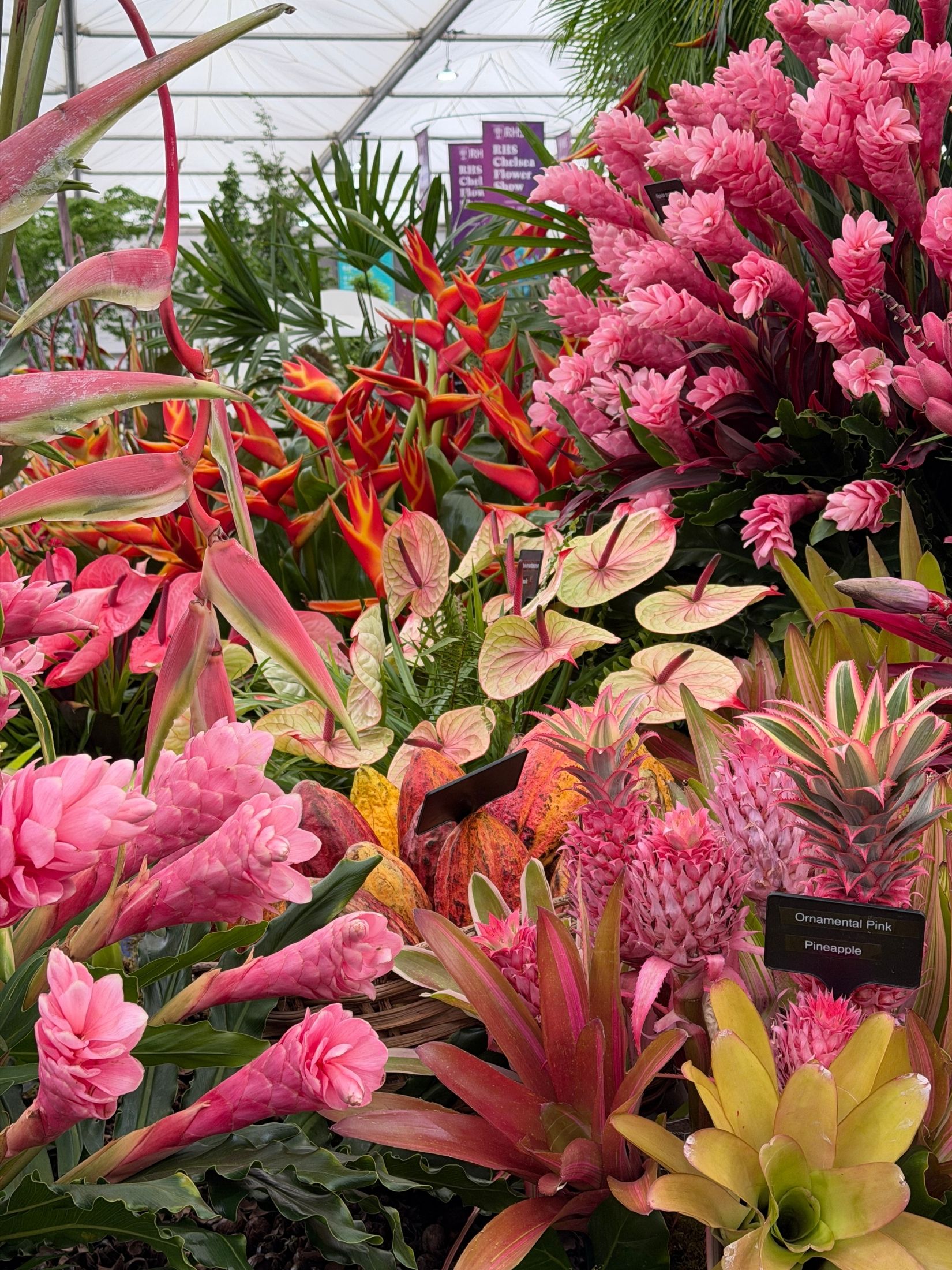
5. Pink Paradise

The layering of bromeliads, orchids, gingers, flamingo flowers, and tropical foliage created dense color environments with almost no visual pause.
(Image credit: STUDIOBODDY)
Hyper-saturated pinks appeared across displays in vivid waves of magenta, electric fuchsia, paradise pink, orchid tones, and candy-like floral color. Dense tropical planting, exaggerated blooms, layered orchids, and color-drenched floral arrangements created highly immersive environments filled with visual intensity.
What felt especially new was the scale and saturation of the color application. Rather than pink appearing as an accent, entire spaces were flooded with tonal variations ranging from acid pink and digital magenta through to softer lilac-pinks and glossy tropical coral tones.
The palette also carried a strong tension between natural and artificial appearance. Although entirely botanical, the colors resembled neon pigments, synthetic surfaces, glowing screens, and hyperreal digital imagery. Glossy petals, lacquered foliage, and highly polished floral surfaces further amplified this effect.
Rather than soft femininity, pink became bold, immersive, and visually dominant, transforming tropical planting into one of the season’s most amplified and high-impact floral directions.

John Lewis
Marcy Sling Garden Chair in Fuchsia
For more color inspiration, sign up to the Livingetc newsletter, and never miss out on the most exciting ideas.
