

All summer long, I play a game of cat and mouse with the sun in my garden. Just when I get comfortable and settled, I find myself suddenly in a shady patch, while in the midst of a heatwave, I find myself seeking out the shade, but it is nowhere to be found.
It’s a lesson in landscape design — and as garden designer Joanna Archer tells me, it always starts with the sun. “It’s possibly one of the most important bits that we think about when we start the design and layout,” she says. “Once I’ve got the survey, I’ll go to the site and do a ‘site analysis’. I really think about the aspect of the garden and where the sun is falling at different times of the day, and even different times of the year, and focus my attention on those areas. It’s really important for our layouts that you have places to move around the space and somewhere else to go.”
So, to understand how to better plan a garden, especially if you’ve got a shady garden, I picked Joanna’s brain on the best ways to lay out your landscape’s seating areas to make the most of what the warm weather has to offer, based on where gets the sun at different times of day.

How to Analyze Your Garden’s Sun
Unless it’s already a bright, sunny day in the middle of summer, it’s going to take a bit of imagination to understand how your space interacts with the sun. For garden designers like Joanna, it’s become second nature, but you’ll need to look not only at where the sun rises and sets, but also the environment beyond your control, too.
“There’s a lot to think about,” Joanna says, “You might be thinking about how shadows fall off buildings, and that might be off your own house, a neighbor’s house, or a shed. You think about how those shadows fall across the garden, but also the trees you might already have or your neighbor’s trees. Are they evergreen? Are they deciduous? Is light going to come through them in the winter or not?”
“Walls and fences all cast shadows too,” the designer adds. “I’m always thinking about getting the plant palette right for those conditions, but at the same time, I’m thinking about where it’s nice to sit so it’s not cold and damp.”
Joanna Archer
Joanna Archer is a London-based garden designer known for creating elegant, deeply considered outdoor spaces that feel both timeless and effortlessly liveable. Through Joanna Archer Garden Design, she collaborates closely with homeowners, architects, and interior designers to craft bespoke gardens with exceptional planting, bespoke joinery, lighting, and styling tailored to each client’s lifestyle. With more than 15 years of experience and a reputation for meticulous attention to detail, Joanna designs gardens that bring beauty, calm, and year-round enjoyment to private homes across London and the Home Counties
How Many Seating Areas Should a Garden Have?

This garden perfectly sets up the different seating areas the owners wanted to use throughout the course of the day.
(Image credit: Tom St Aubyn. Design: Joanna Archer)
You might have thought about one stylish outdoor seating area for your garden, but the chances are, it’s not going to be usable at all times of day without putting it in the center of your garden (and what about privacy in that case?)
No, the dream garden has multiple places to sit… but how many? “I would say you could have three seating areas,” Joanna says, depending on the size. “You could have a little space to sit for a morning coffee, and that doesn’t need to be much bigger than an area for a bench or a little bistro set. Then you might want a bigger lounging space for the evening, and a more midday eating area.”
Morning sun

Channel a morning coffee break in your choice for early sun seating.
(Image credit: Tom St Aubyn. Design: Joanna Archer)
“For clients, I’ll suggest having somewhere to take a coffee and a biscuit out in the morning, and that really appeals to them because they haven’t thought about having a little moment somewhere else in the garden,” Joanna says. “In this area, think less lounge-y, more upright, more bistro, more ‘frothy coffee’,” she says.

Habitat
Elara 2 Seater Metal Garden Bistro Set in White
Midday sun
Shade management is key, Joanna says. “Some clients tell me they don’t want to sit in the sun when eating lunch, so we deliberately put the dining space in the shade. Others like the sun, so we’ll bring in elements like big parasols or retractable awnings.”
These awnings are an emerging garden trend, Joanna says. “I’m putting in two in the next couple of months. It’s a nice, flexible way of creating shade, particularly when attached to your house, extending over the dining space. If you don’t need the shade, you can just retract it.”
And, not only does it work for shade, but it helps make your dining area more private, especially from neighbors’ upstairs windows.

Amazon
Vidaxl Manual Awning Frame With Leds
Evening sun

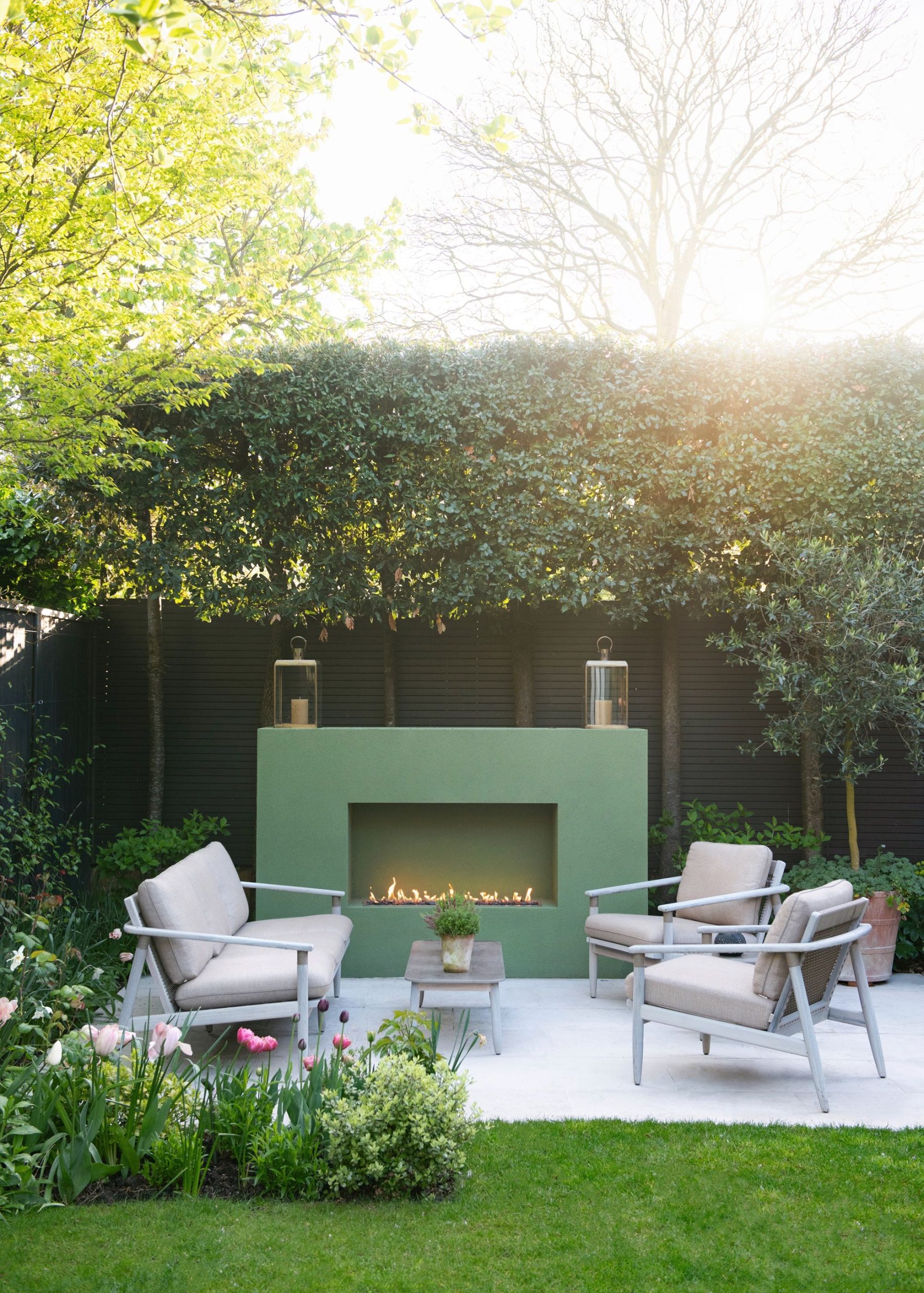
Create a lounge-y moment for the end of the day, into the evening.
(Image credit: Tom St Aubyn. Design: Joanna Archer)
In the late afternoon and evening is where you’ll want a more relaxed moment to enjoy the cooler sun, and sunset. “Think big L-shaped sofas or slightly more laid-back armchairs around a fire pit,” Joanna says. “That works really well in the evening.”
“It has a completely different atmosphere,” she says. “It can feel really soft and a little bit private, surrounded by planting.”

John Lewis
Marcy 2-Seater Sling Garden Sofa, Navy
Of course, there are other elements of your garden design that you can also plan around the sun. You might consider what elements you want to put in your garden’s biggest sun traps, for example. There are other elements in play too. You will want your dining area next to your outdoor kitchen, for example, or if you have a pool, it might make most sense to have a lounge area around that, too.
For more inspiration for your garden this year, why not sign up to the Livingetc newsletter?
