

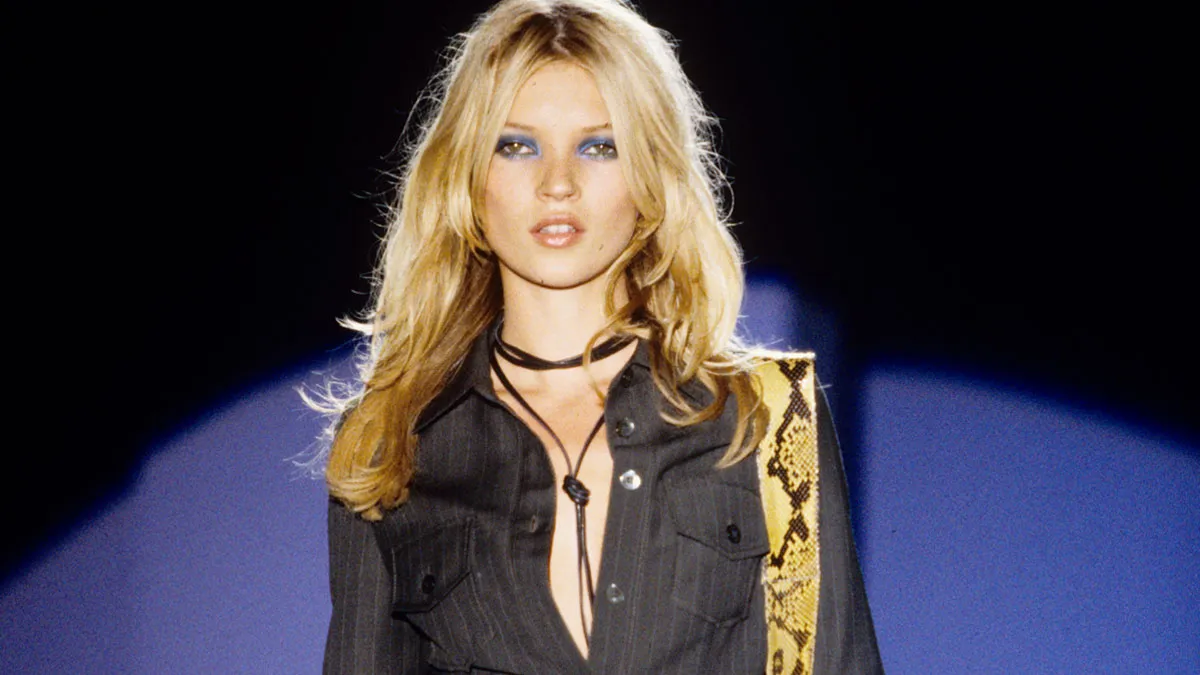
In this context, nostalgia becomes less about escape and more about validation — a way of signaling history and depth in a cultural moment that often feels transient. But for brands, this shift creates a difficult balancing act: how to feel rooted without becoming repetitive. “Nostalgia also doesn’t negate novelty or innovation. This may seem contradictory, but the newest technology — when deployed wisely, and not for the sake of it — can actually help us realize the power of nostalgia,” Corser continues.
She points to adverts using AI-assisted visual technologies to turn back the clock, like Adidas’s Backyard Legends film for 2026 Fifa World Cup, which collapsed different soccer generations into a single narrative timeline, placing contemporary stars like Lionel Messi and Jude Bellingham alongside past icons like Zinedine Zidane and David Beckham. As well as the Xfinity Jurassic Park Super Bowl ad this year, which reunited the original Jurassic Park cast in a reimagined version of the 1993 narrative. “The tone for both was self-referential and humorous, with a sense of history that doesn’t weigh it down — the nostalgia came alive thanks to the tech,” says Corser.
What makes a contemporary brand now
If nostalgia reflects a desire for familiarity, the more pressing question for brands is what comes next: how do you actually connect with consumers today, rather than simply reflecting the past back at them?
The answer lies not in revisiting cultural heydays, but in understanding what consumers value and building from there. A useful case study is Coach, which experienced a second cultural wind during the Y2K revival, as Gen Z rediscovered its archive and began sharing retro Coach finds across social media. Crucially, however, its resurgence has not been driven by simple re-issues of past hits, but by a reinterpretation of its brand values through a contemporary lens.
“We have spent countless hours researching Gen Z to better understand what matters most to them. Through this work, we learned how they want to connect with brands in ways that go beyond product — they are looking for authenticity, self-expression, and emotional connection,” says Jennifer Yue, SVP of strategy and consumer insights at Tapestry and Coach. “Our approach to ‘expressive luxury’ is about creating timeless, versatile products that inspire confidence, paired with storytelling rooted in real insights about their lives. That is what ultimately creates lasting cultural relevance beyond any single trend or moment.”
For example, rather than simply re-issuing its early-2000s It-bags, Coach has repositioned its heritage silhouettes — such as the Tabby and the Brooklyn bags — through a more expressive, mix-and-match styling language aimed at Gen Z in particular. Campaigns have leaned heavily into self-expression rather than status, with open casting and creator-led storytelling that reframes the bags as tools for individuality rather than archival nostalgia. At the same time, the brand has expanded its Coachtopia sub-label, designed around circularity and upcycled materials, explicitly targeting Gen Z’s expectations around sustainability and transparency.
