

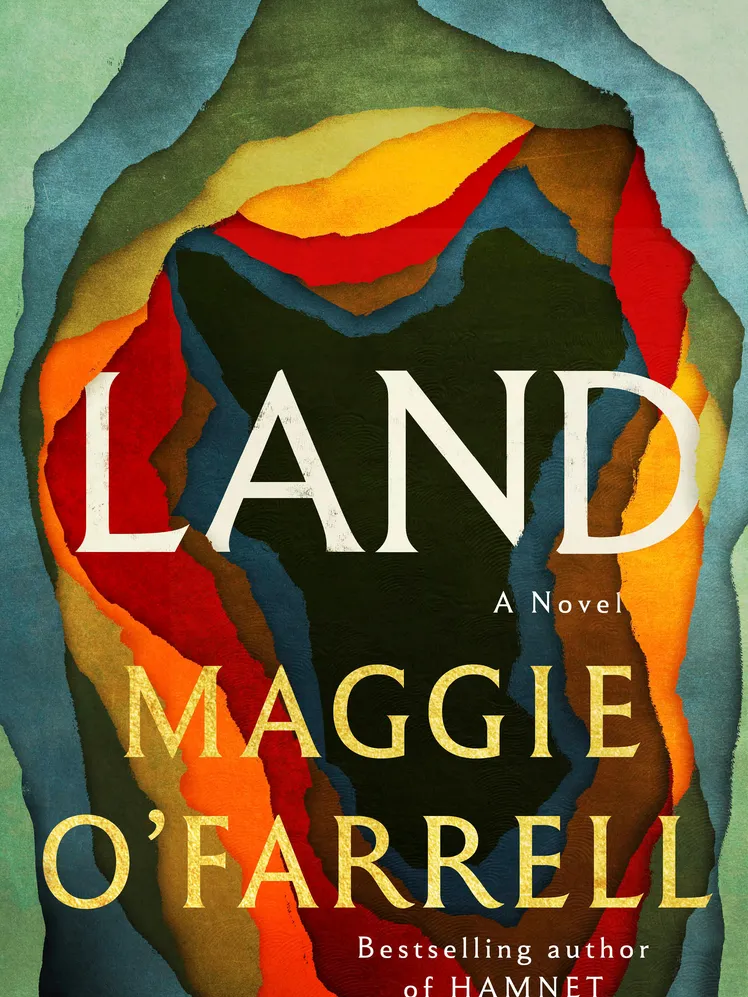
Land by Maggie O’Farrell (June)

Maggie O’Farrell is in the spotlight following the runaway success of Chloé Zhao’s adaptation of her 2020 bestseller Hamnet—and her Oscar nomination for co-writing the screenplay. And this summer, she returns with a haunting and heart-wrenching ode to her home country of Ireland and the checkered history its land has borne witness to across the millennia. The heart of the story is the complicated relationship that Tomás, a mapmaker charting a remote, windswept peninsula in the west of Ireland in the decades following the Great Famine, and his strong-willed wife, Phina, have with two of their children: the bookish Liam, who finds himself pulled towards the glittering promises of a local Catholic priest, and the headstrong fiddle player Enda. Despite its epic, polyphonic sweep, its packed with plenty of O’Farrell’s poetic, untamed language, as well as the kind of striking details that will vividly stay with you long after you read it: a mystical well in a forest with supernatural powers that either grants wishes or inspires madness, an enormous Irish wolfhound that reappears across centuries, references to Gaelic folklore, and eventually a passage to India and the furthest reaches of the British Empire. Land is a book of loss and upheaval and generational trauma, but also, ultimately, one that pulses with a luminous sense of hope—it is sublime, in every sense of the word. —L.H.
Villa Coco by Andrew Sean Greer (June)

Some books just feel like a vacation. Andrew Sean Greer’s latest, Villa Coco (Doubleday), tells the story of a hapless recent graduate (he spent his college years making desultory academic efforts but vigorous romantic ones) who arrives, during a dusty and hot summer, at a Tuscan village. He is there, ostensibly, to inventory the contents of an overstuffed villa inhabited by an imperious Baronessa known as Coco. The Baronessa is eccentric but slyly wise, offering an education that far exceeds the one our protagonist, Joe—rechristened Giovedì—has obtained until now. Among her earliest lessons: how to obtain a more suitable wardrobe. (By procuring the contents of a dead man’s closet, it turns out.) That early instruction initiates “the slow transformation from an American into a man,” a process aided by just about every colorful figure who crosses the threshold of the villa. The taxonomic enterprise ostensibly motivating the hero’s sojourn keeps getting shunted to the side by these characters, who arrive to indulge in long lunches, roll up their sleeves and help with the olive harvest, or teach Giovedì about affairs of the heart. —C.S.
