

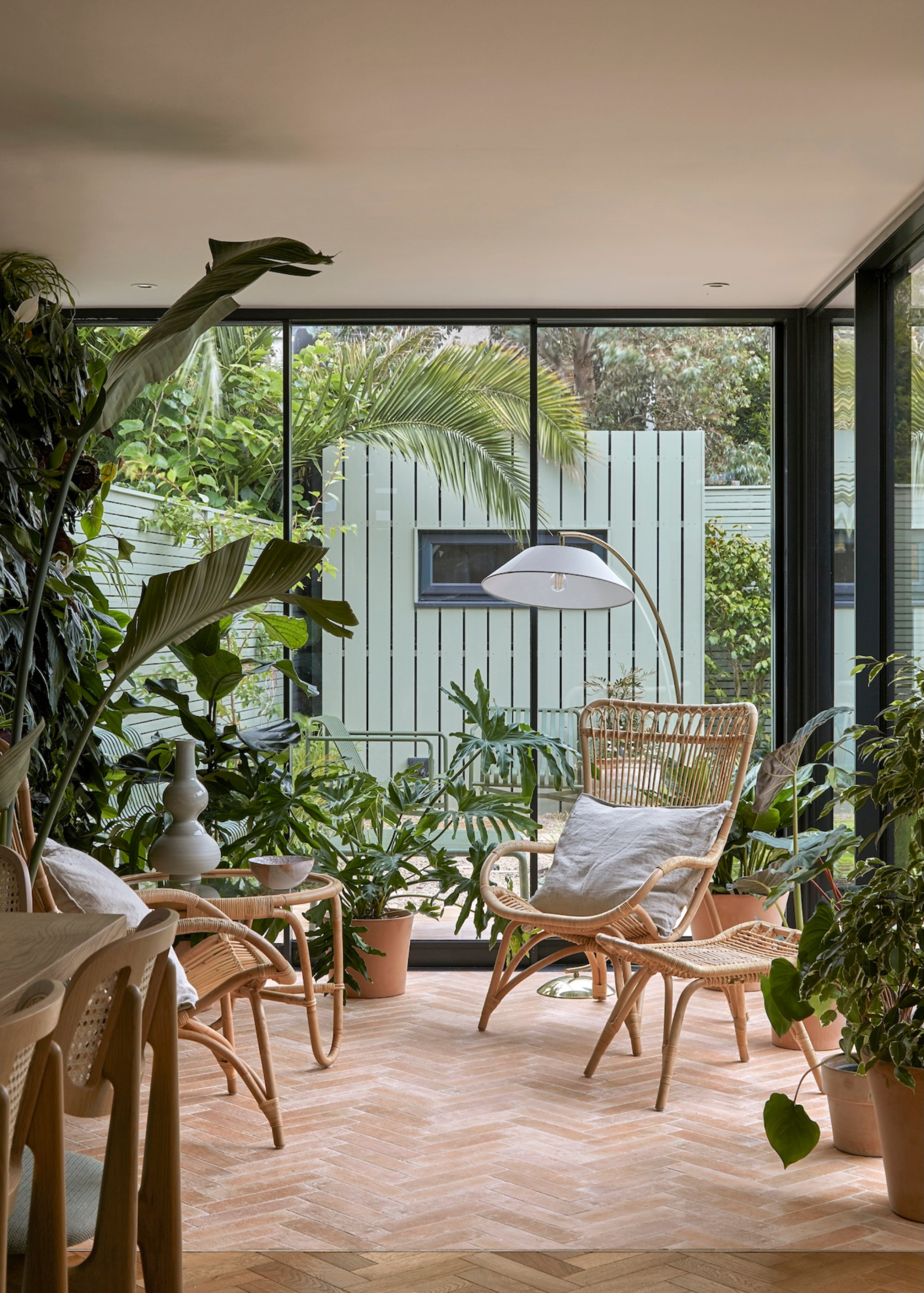
As a multidisciplinary design studio working between cultures, I’ve become increasingly aware that the way we design our homes reflects how we see our relationship with nature.
Today, that relationship is under strain. Climate change, overheating buildings, and a growing sense of disconnection from our surroundings are forcing us to question long-held assumptions about comfort and control. For me, this is where Japanese spatial planning and concepts like ‘Ma’ become not just relevant, but essential.
So, let’s talk about how Japanese interior design and its use of negative space can impact the ambiance of a home.


Yoko Kloeden Design is a London-based architecture and interior design studio, founded by Yoko Kloeden in 2016. Located in West London, the studio specializes in crafting mood-enhancing sanctuaries, seamlessly blending Japanese aesthetics with natural, serene elements. Each project aims to create spaces that feel both harmonious and deeply restorative, reflecting Yoko’s commitment to calm, balanced interiors. The studio provides a full range of architecture and interior design services for private and commercial clients, carefully crafting every space to bring balance, beauty, and well-being to those who inhabit it.

Framing your views is a beautiful way to work your surroundings into your indoor vignette.
(Image credit: Yoko Kloeden)
Historically, our ideas about architecture and nature were shaped at the highest levels of society. In Europe, the logic of places like the Palace of Versailles still echoes through residential design today. Versailles expresses a worldview in which architecture dominates: nature is clipped, ordered, and bent to human will. That philosophy filtered down into homes that are sealed, rigid, and mechanically controlled, where comfort is engineered rather than negotiated.
By contrast, Japanese architecture evolved from a very different premise. One of the clearest examples is the Katsura Imperial Villa in Kyoto. Katsura doesn’t impose itself on the landscape; it listens to it. Pavilions are loosely arranged around a Japanese garden, with no single commanding axis. Sliding screens, verandas, and layered thresholds blur the distinction between interior and exterior.
The engawa — an outer corridor open to the garden — creates a sheltered space that is neither fully indoors nor fully outdoors, inviting contemplation of what lies just beyond the wall. The garden is not ornamental; it is an active spatial and environmental component, modulating light, airflow, and the psychological experience of the home. The house becomes a framework for living with change rather than resisting it.
This was not abstract idealism. It was a practical response to context. Japan’s monsoon climate, seismic conditions, and dramatic seasonal shifts demanded flexibility and humility in the face of nature. Typhoons, earthquakes, and heavy snowfall made rigid, heavy structures a liability.
So, architecture had to breathe, flex, and adapt. Deep eaves controlled solar gain, sliding panels regulated ventilation, and lightweight timber construction could be repaired and rebuilt. Where Europe’s relatively moderate climate allowed for stable, formal landscapes and solid masonry walls, Japan’s conditions taught its builders that coexistence with natural forces was not a choice but a necessity.

Allowing your outdoor and indoor spaces to merge into each other allows for a cohesive experience.
(Image credit: Yoko Kloeden)
This philosophy has profoundly shaped my own work. I don’t see interiors as sealed containers to be styled and insulated from the world. I see them as mediators between people and their environment. Framed views as seen in hanami, transitional spaces, natural homeware, and sensitivity to light and seasonality are not aesthetic choices alone — they are tools for wellbeing and resilience.
In Japanese spatial thinking, emptiness is not absence but an active ingredient: rooms are shaped by what is left out as much as what is placed within. A shaded threshold, a window aligned with planting, or materials that patina over time can fundamentally change how a space feels and performs.
What’s striking is how timely these ideas feel now, particularly in Europe. As heatwaves and extreme weather expose the limits of rigid building models, we are being pushed to rethink how homes breathe, adapt, and respond.
Japanese spatial thinking offers a mindset shift: from control to coexistence, from permanence to adaptability. Rather than engineering comfort mechanically, it asks how architecture can work with environmental forces — shade trees for cooling, permeable materials, openings designed for cross-ventilation — strategies that let natural processes play a beneficial role rather than shutting them out.

Decorating with plants en route to the garden will make your outdoor space feel like an extension of the inside.
(Image credit: Yoko Kloeden)
Importantly, this isn’t about recreating traditional Japanese houses or large gardens. It’s about adopting an attitude of attentiveness. Even modest urban homes can benefit from rethinking where light enters a room, how a garden view is framed from a kitchen table, or whether a hallway might serve as a transitional space that slows you down rather than rushing you through. The lesson lies in the mindset rather than the aesthetic.
For me, the growing interest in Japanese spatial philosophy isn’t a trend — it’s a cultural correction. As designers, we have a responsibility to create homes that support long-term comfort, environmental responsibility, and emotional well-being.
When architecture and interiors are conceived as part of a larger living system, rather than as isolated objects, we begin to design spaces that are not only more sustainable but also more humane.
Space-Conscious Decor That Stands Out

Audo Copenhagen
Dimmable LED Table Lamp Ray with USB Port

PR Home
Outdoor Rattan Pendant Light Maja

Westwing
In- & Outdoor Side Table Doug

GUBI
Swivel Garden Lounge Chair Pacha

HAY
Palissade Powder-Coated Steel Ottoman

H&M
Dark Brown Metal Plant Pot
Speaking of the interplay of light and nature, komorebi is the Japanese word for dappled light that will help you romanticize your home.
And for more advice on designing a house that feels like a home, sign up for the Livingetc newsletter.
