

The first thing I see when I walk into Owen Peters’s room is a face thick with makeup: baby blue eyeshadow, Twiggy lashes, heavy pink rouge, and thin, drawn-on eyebrows. The face stares at me, frowning lightly, from a print on the wall, pinned next to a fragrance ad starring Timothée Chalamet. It’s a face of diligent glamour, like that of a ‘20s flapper or a mod-era muse. I wonder aloud who the face belongs to. Owen tells me it’s his: the portrait is a selfie he painted over with makeup products. I see it now.
Owen grew up in Shakopee, Minnesota, a suburb of Minneapolis best known for housing the largest amusement park in the Upper Midwest. On my Uber ride to Owen’s childhood home, where he’s returned from college for summer break, I pass four soccer games. The local diner offers tater tots with breakfast and the Mall of America is a 20-minute drive down the highway. Shakopee contains the particular plenty that one associates with Middle American comfort, but it is not a place of glamour—diligent or otherwise.

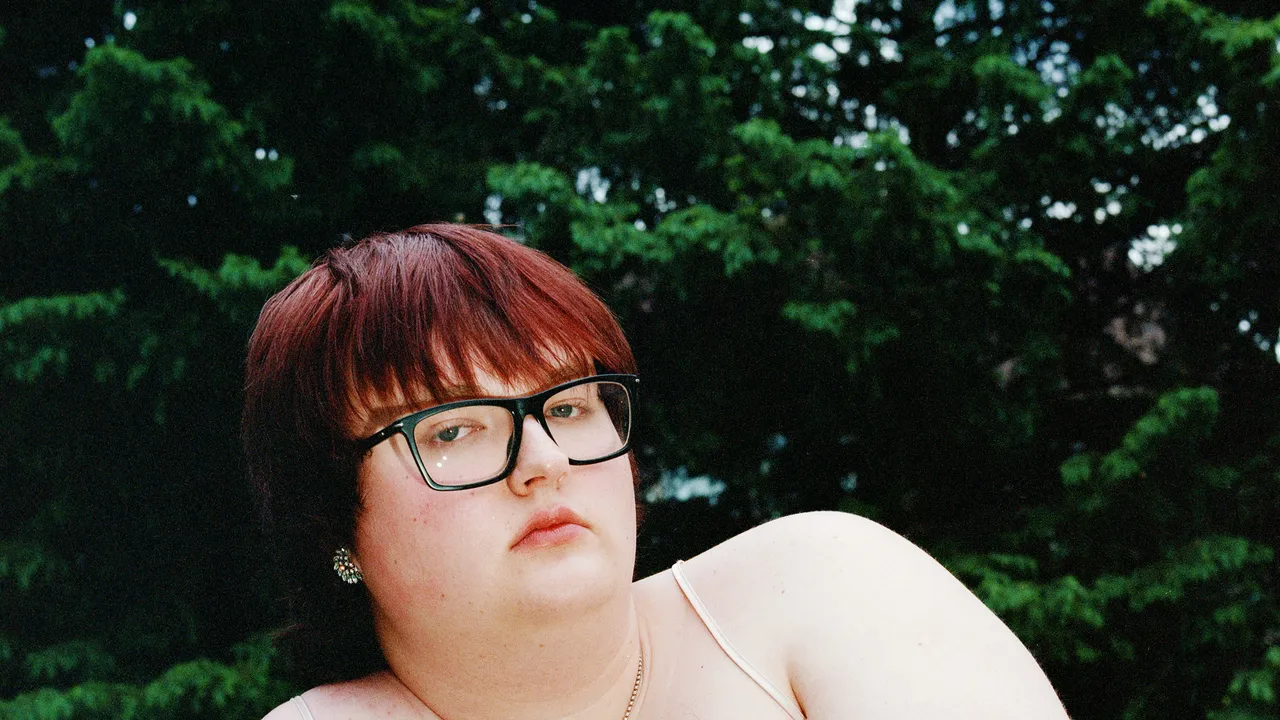
Photographed by Ashley Markle
As a child, Owen, now 19, loved musical theater, anime, and video games. Those interests informed his first forays into fashion: the T-shirts that he wore during his early middle school years featured his favorite characters. As he neared high school, though, things changed. “I distinctly remember I was like, I’m done with this. I’m too old for this,” Owen says of his graphic tee phase. At a time when his peers were reaching for status symbols like brightly colored Nike athletic wear and T-shirts emblazoned with the American Eagle logo, Owen headed in the opposite direction: “I went to Target and got a striped navy blue shirt and a plain maroon shirt. I wanted to be as blank as possible, as brandless as possible,” he says. The goal was to fade into the background: “It was like a way to hide, especially in middle school, when there [was] growing homophobia.”
Not long after, COVID-19 locked down the world. Owen’s classes were suddenly on Zoom, and time away from the social norms of school gave him the space to experiment. TikTok served Owen his first real fashion references—“alt” aesthetics developed and worn on the app by kids his age in real time. “I didn’t necessarily want to wear those clothes, but I did want to be seen as cool,” he says. His inspirations had yet to translate into how he actually dressed, however: “I was still very much uncomfortable with expressing myself.”
