

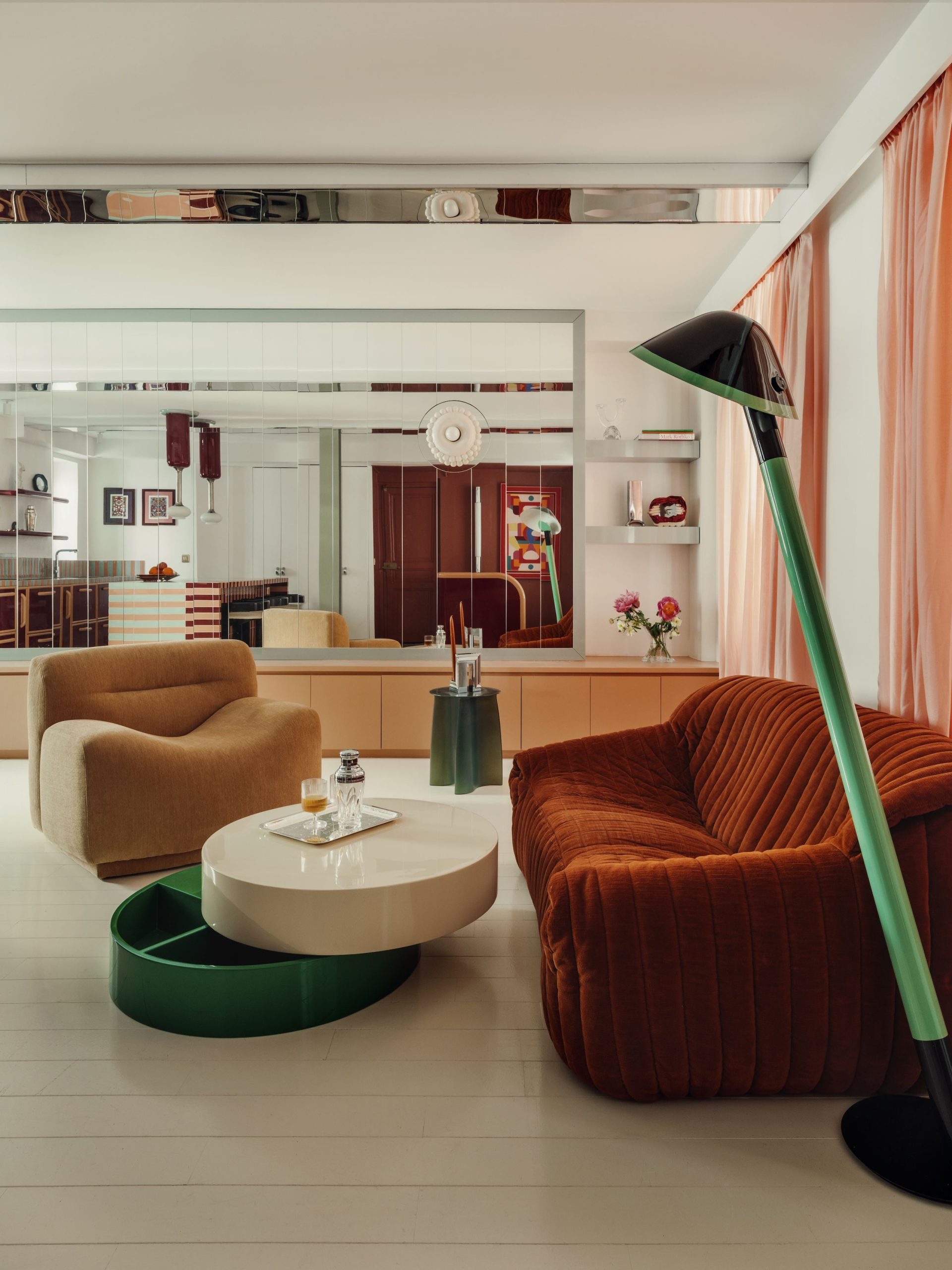
I have a slightly unpopular opinion about interiors becoming “more personal” now. Previous eras were brilliant at this. Homes had inherited pieces, handmade objects, mixed finishes, and older finds, whether antique, vintage, or retro, that did not necessarily match, but somehow worked. Somewhere along the way, with mass-produced furniture and perfectly coordinated room sets, we became a little too careful. The same wood tone, finish, style, and even mood. That is often what takes the life out of a room.
So if you have ever walked into a space and felt it was a bit soulless, the answer is not always more color. Sometimes the sofa works, the coffee table is right, and the palette makes sense, but the room still feels flat. More often, what it needs is texture, contrast, and a better conversation between materials.
As a Design Lab by Livingetc stylist, I look at materials in three ways: how they interact with light, how their tones work together, and whether they bring a sense of time to the space. The goal isn’t to make everything match, but to understand what the room needs more of and choose pieces that create balance. Below, I’ve broken each principle down with examples that show how mixing materials can make a space feel layered and effortless.
Light & Finish
The first thing I look at is how light behaves in the room. If a space feels dark or heavy, reflective finishes like glass, metal, lacquer, glazed ceramic, or a mirror can help catch the light and move it around.
If the room already feels bright or too sleek, go the other way. Matte finishes, honed stone, textured textiles, raw wood, or woven details can help quiet it down. It is not about choosing the “right” material. It is about knowing whether the room needs reflection or softness.
Hues & Tones
When you are mixing materials, especially wood, everything does not need to match. What matters more is the undertone. If you are working with warmer woods like oak, walnut, honey-toned timber, or darker brown stains, echo that warmth through brass, bronze, terracotta, rust, caramel textiles, or warmer stone. They do not need to be the same shade, but they should feel like they are sitting in the same family.
Cooler tones work the same way, just with a different mood. Grayed oak, ash wood, stainless steel, chrome, slate, or blue-green accents naturally sit better with smoked glass, cooler ceramics, soft grays, and silvery metals. The point is to understand whether the room is asking for warmth or coolness, then choose pieces that make the tones feel like they belong together.
Time & Character
Once your room feels balanced, this is the layer that gives it soul. Bring out the imperfect pieces, the vintage homeware, older frames, handmade ceramics, or memorable objects that spark something when you catch a glimpse of them.
Think a sleek lamp beside a handmade ceramic, a minimal sofa with a reclaimed wood table, or polished metal next to woven texture. That contrast is what stops a room from feeling dull and makes it feel collected instead.
Before you buy the matching side table or the same finish in a different form, pause for a second. The pieces that make a room feel interesting are often the ones that interrupt the scheme slightly.
If you need help finding that balance, Design Lab by Livingetc offers a free product sourcing service called Find. Send us your brief, and we will pull together a curated edit of pieces tailored to your style and what you are looking for.
While you’re here, sign up for the Livingetc newsletter for more styling tips and pieces worth knowing about.
