

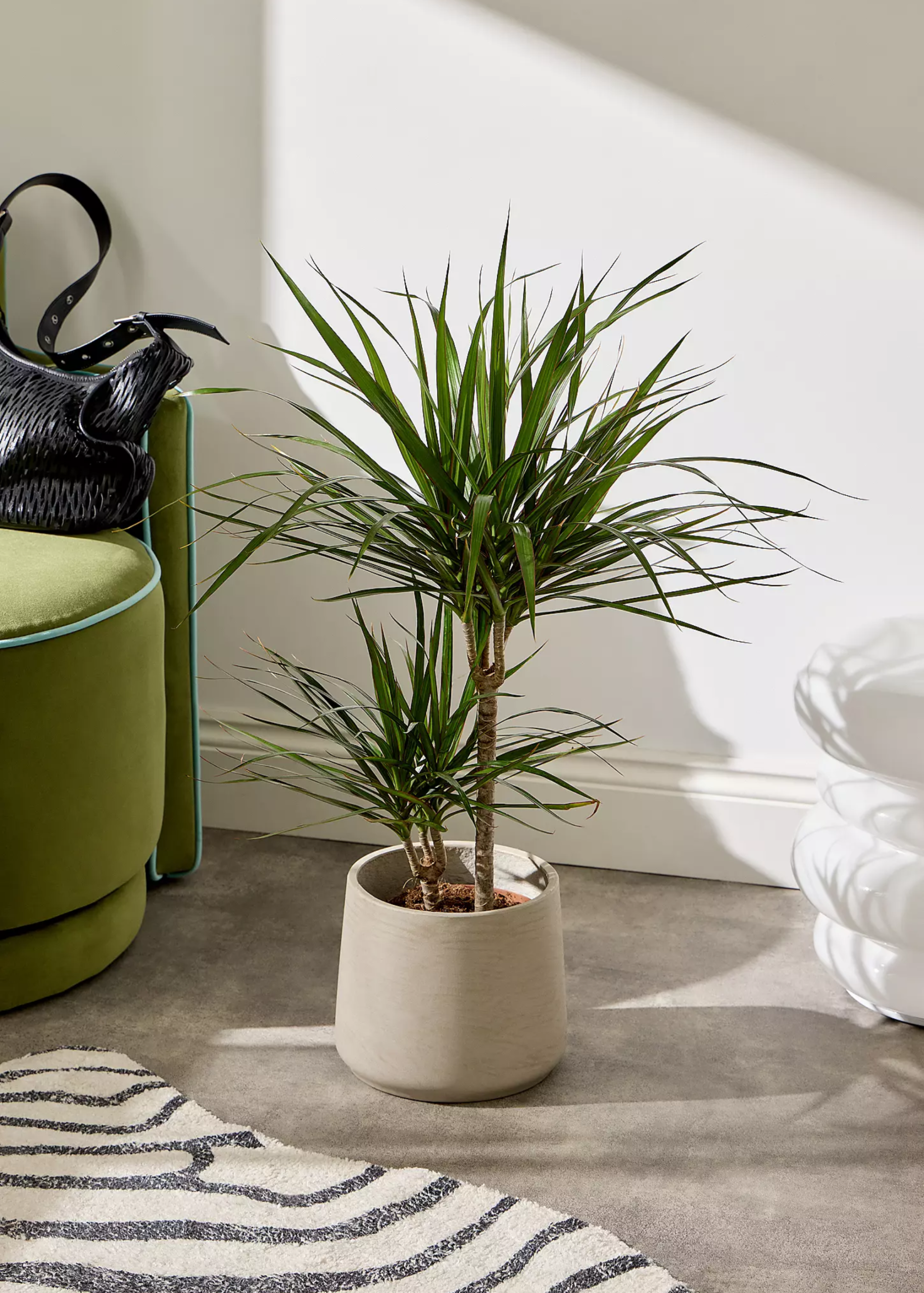
It’s not that houseplants are getting more interesting, but the role they currently play in design is finally shifting into the spotlight. And since these pieces of living decor are no longer in the background, structural houseplants are having a moment.
Think low-maintenance plants like dragon tree, desert cactus, rubber plant, and some more effort-driven cultivars like fiddle leaf fig and bird of paradise. Each of these houseplants adds a layer of visual interest that’s tough to replicate.
So, let’s get into what each of these special plants has to offer and how to style them to accentuate their natural features.
Article continues below
1. Fiddle Leaf Fig

With some measured effort your fiddle leaf fig can grow to become a glossy structural feature.
(Image credit: Beards & Daisies)
Is the ficus lyrata one of the more high-maintenance houseplants? Yes. But does it bring structure and lush glossiness as a result of considered fiddle leaf fig care? Absolutely.
“A fiddle leaf fig is a great starting point as the leaves are broad and sculptural, so it naturally draws the eye without needing much around it,” says Jo Lambell, founder of Beards & Daisies. “It also works best in a bright spot with breathing room.”
I recommend this Fiddle Leaf Fig Houseplant from Beards & Daisies, which comes in a range of sizes with stylish indoor pots that fit into modern homes.

Jo, the founder of Beards & Daisies and author of The Unkillables, discovered her passion for houseplants in 2001 after transporting a six-foot monstera home on public transport. This sparked the idea for a business that makes plant delivery more accessible. As Beards & Daisies approaches its 10th anniversary, it offers a carefully curated selection of indoor plants, from prayer-plants to palm trees. Jo and her Plant Folk team are all about spreading plant love and sharing expert tips with both budding and seasoned plant enthusiasts. And with their 100% recyclable or compostable packaging, they’re keeping things green in more ways than one.
2. Dragon Tree

This plant is popping up in all the coolest contemporary homes and I can see why.
(Image credit: Urban Outfitters x Hello Houseplants)
Next, we have what might be one of my favorite structural houseplants to date — the dragon tree. Also known as dracaena marginata, these low-maintenance indoor trees are just so chic.
The spiky leaves and woody branches that rigidly stem upwards feel like a cool addition to spacious living rooms. These cultivars like bright, indirect light and warm temperatures.
Depending on how much space you’re working with, you can go for this Large or Medium Dragon Tree Houseplant from Urban Outfitters x Hello Houseplants.
3. Bird of Paradise

It might take time to flower, but even in the absence of blooms, bird of paradise charms.
(Image credit: Patch Plants)
Tropical houseplants are beautiful in their own right, but if you find one with some structure, it’s a win-win. And that’s why styling bird of paradise indoors is so rewarding.
“The leaves on a bird of paradise are larger and more architectural, so it makes sense in rooms where you want a stronger statement,” says Jo. “Just remember, it needs good light to really look its best.”
This Bird of Paradise Houseplant from Beards & Daisies is between 110 cm and 120 cm. Plus, in my opinion, it’s a stunning addition to your entryway.
4. Rubber Plant

Rubber plants and footed planters add height, texture, and fullness to your home.
(Image credit: Beards & Daisies)
According to Jo, rubber plants are one of the best structural houseplants for contemporary indoor gardens. Also known as ficus elastica, this cultivar’s vertical foliage makes it a winning choice.
“A rubber plant’s leaves are dark, glossy, and quite uniform, so it gives a really clean look without needing much styling around it,” says Jo. “It grows upright, which helps add structure without making a space feel busy.”
This Large Rubber Plant from Beards & Daisies will help you skip the growing period and instantly add some charm to your home.
5. Desert Cactus

These cacti grow to tall heights with a branching pattern that’s enchanting and compact.
(Image credit: Plant Drop)
Technically speaking, decorating with cacti has always been a structural game. However, depending on the types of cacti on display, you can take advantage of their visual impact.
As someone who spends most of her time looking at modern homes, I have found that desert cactus is the most interesting variety around. Known to experts as euphorbia eritrea, this plant does well in full sun and infrequent watering.
This Desert Cactus from Plant Drop might be on the pricier side of houseplants, but it’s specially cultivated by an Italian grower and stands proud at around 170 cm.
Style Your Sculptural Plants to Stand Out

West Elm
Colin King Washed Ficonstone Planter
For your taller plants, a washed look like this will give it a natural base that looks classic in any space.

Anthropologie
Medium Scalloped Ceramic Planter
If color is what you’re after, this scalloped style from Anthropologie is a pretty option.

I’m obsessed with this sandy planter from Westwing’s collection. It adds texture and height to even your shorter plants.

West Elm
Gio Plaster Plant Stand
This Gio Plaster Plant Stand is a West Elm best seller that I’m recommending to every houseplant minimalist.

Design Letters
Side Table Trisse
Even a neat side table like this can make your structural houseplants stand out as they grow.

TOLLU
Tollu Metal Pedestal
Since structural plants are a tad dramatic, I’m willing to bet that you have a flair for interiors that lean towards bolder designs. And so, our guide to houseplant maximalism should be your next read.
In the meantime, subscribe to the Livingetc newsletter for more inspiration on all things design.
