

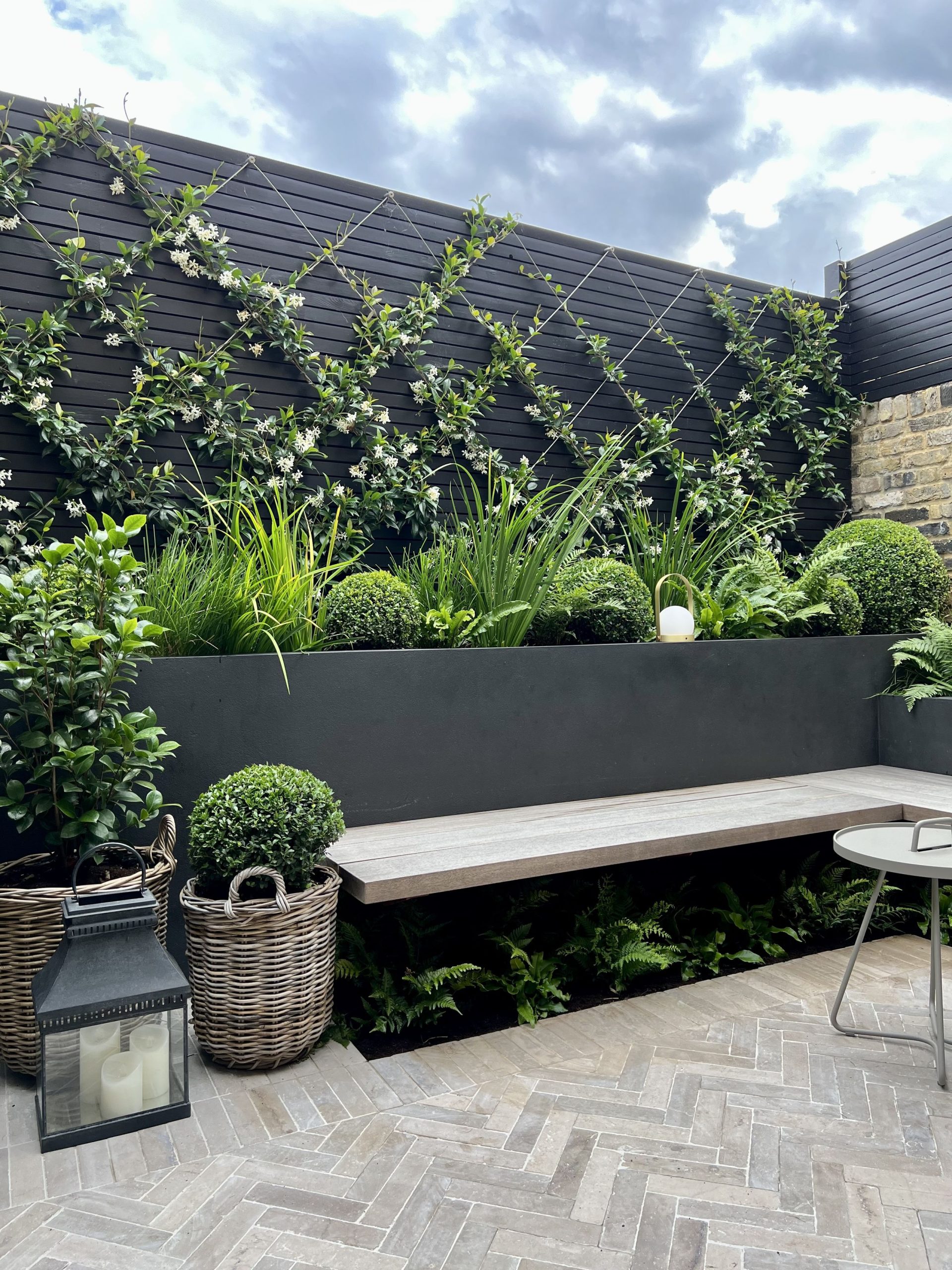
When you’re planting up a small garden, there’s less space to create a sense of depth with your planting, which can mean things feel a bit flat.
However, when searching for inspiration for my own garden recently, I noticed a design hack that might just help to make a small garden feel lush — underplanting areas such as under your garden benches.
“When you’re planting larger gardens and big herbaceous borders, you’re often putting taller plants at the back, such as hedging and trees, then taller grasses and perennials, and then smaller plants as you get closer to the lawn or path,” garden designer Tom Howard tells me.
“So we were working on that same idea where you’ve got low-level plants, then the structure of the bench, but also planting at a higher level in the raised bed. It’s trying to draw the eye up to the rest of the planting.”

Tom Howard
Tom Howard Garden Design founder Tom Howard is an award-winning garden designer known for creating naturalistic outdoor spaces that balance bold composition with soft, seasonal planting. Based in South West London and Surrey, Tom leads a full-service design-and-build studio specializing in contemporary gardens that feel both timeless and deeply personal.
It was one tool that Tom used in this design to make sure it felt lush and green. “It was a tiny, tiny garden — about 15 square meters,” Tom says. “We were building these raised beds with a floating bench, and planting space was limited. So we were trying to find creative ways of bringing as much green into a small space as possible.”
It’s a clever idea that helps small spaces feel more three-dimensional, and a creative way to bring as much green into a garden as possible. Want to try it for yourself? Here’s how Tom advises approaching underplanting areas like benches in your garden.
How to Choose Plants for Low Level Underplanting

“You always find with garden seating and benches on patios that leaves collect underneath,” Tom says. “By having evergreens and ferns under there, leaves just get lost amongst it, so it’s actually a way of keeping a garden tidier.”
(Image credit: Tom Howard)
As with any garden, it’s hard to generalize which plants will thrive, but there are some particular considerations for planting in these areas, according to Tom.
For example, you might want to think about whether this planted area is going to be useful for surface runoff from your patio. “If you’ve got a paved area, you need somewhere for water runoff from rainfall,” Tom explains. “You can slope the paving under the bench into the soil area, so it deals with runoff naturally.”
A clever idea, but you’ll just need to consider plants that can handle fair amounts of water.

The climbing trellis and raised planters add extra levels to this planting scheme.
(Image credit: Tom Howard)
Also, it’s worth considering how your space interacts with the sun. “More often than not, under a bench is probably going to be pretty shady, so you want plants that tolerate shade,” Tom adds.
With that in mind, Tom says that usually he looks at landscaping with ferns for these areas. “There are so many different ferns — tongue ferns, woodland ferns — so you can get a lot of textural differences,” he says.
Aside from ferns, Tom says they often use “galium odoratum, and common woodruff,” too. “Brunnera is really good too,” he adds, “and we often use Pachysandra terminalis, which is a spreading ground cover.”
Get the Look

Amazon
Asplenium Scolopendrium Tongue Fern

Pacific
Kubu Rattan Indoor/Outdoor Round Planter

Cane-line
On the Move Table


Audo Copenhagen
Carrie Led Table Lamp – Outdoor

Amazon
Shield Fern Outdoor Plants
You might also think painting a small garden’s fences black is counter-intuitive, but it’s a trick that a lot of landscape designers use.
For more tips and tricks like this for your garden, why not sign up to the Livingetc newsletter this season.
