

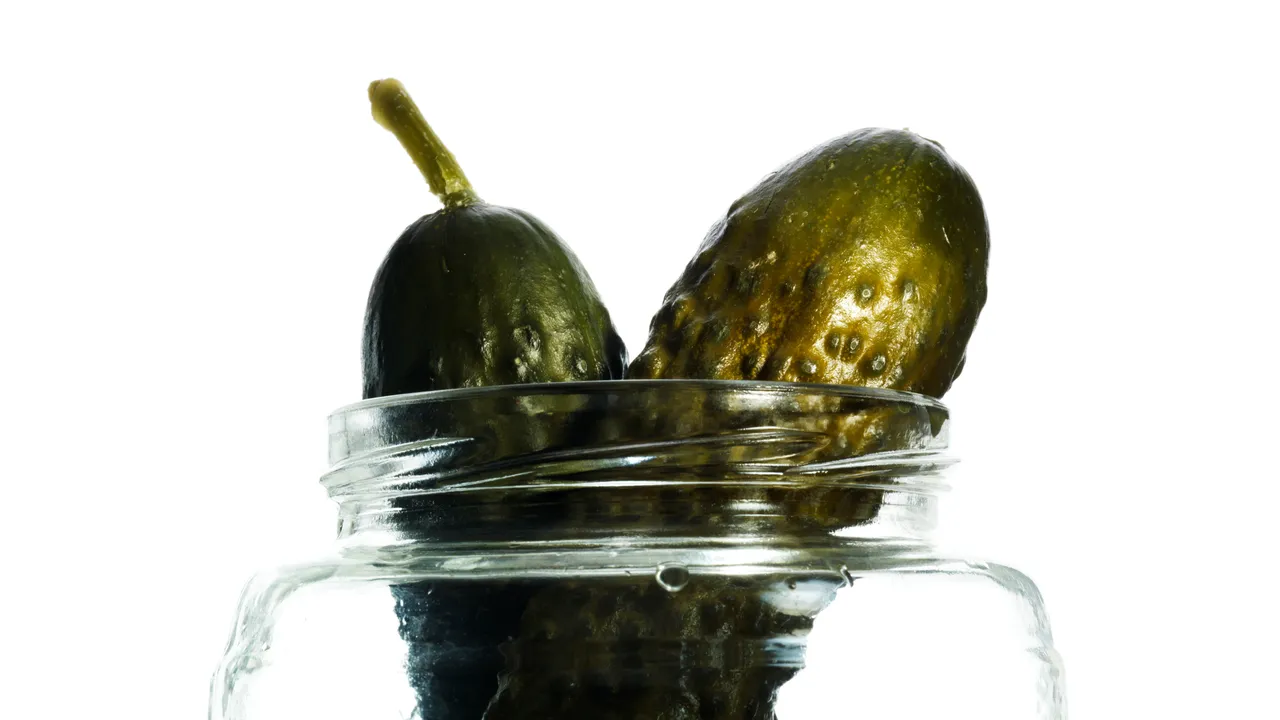
Pickle juice has come a long way since those shots of millennial youth. Instead of pairing it with whiskey, people are now turning to the brine as part of their wellness routines for hydration, preventing muscle cramps, improving gut health, and even lowering those cortisol levels.
Athletes swear by it. TikTok has co-signed it. But as with any health “hack” that comes across our screens, we have to ask the age-old question: Could drinking that vivid green liquid made with sodium, vinegar, water, and more actually be healthy? We’re opening the jar to find out.
Can pickle juice help with cortisol?
We’re all stressed and trying to find new ways to keep our cortisol levels low. But experts say this may just be a social media fad. “While taking pickle juice shots may influence how individuals feel—such as alleviating muscle cramps or providing electrolytes—there are no clinical trials evaluating the relationship between pickle juice consumption and cortisol,” says Gena Hamshaw, RDN, outpatient clinical nutrition coordinator at Mount Sinai. So, it’s not time to replace those “cortisol cocktails” for pickle juice just yet.
What does pickle juice do for our bodies?
There are other health benefits pickle juice may have. Amy Shapiro, RD, registered dietitian and founder of Real Nutrition, says that it could help prevent muscle cramps and reduce dehydration. “Cramp relief is the most well-supported potential benefit of pickle juice,” agrees Hamshaw. Though she says more research is needed, she points to a small study that found one shot of pickle juice shortened muscle cramps faster than water.
Shapiro adds that pickle juice also has the potential to promote gut health. Hamshaw says that the brine from lacto-fermented pickles has probiotic benefits, which are known to help with the gut.
Both Shapiro and Hamshaw recommend consuming pickle juice in small amounts; it is known to be high in sodium, and that can trigger acid reflux or nausea if you have too much of it. Hamshaw adds that pickle juice might not be suitable for those with kidney disease, heart failure, liver disease, or hypertension. You can also consider diluting the juice yourself in water to be safe (and to prevent tooth enamel erosion, says Shapiro).
Pre-made pickle juice is designed to contain specific amounts of sodium, vinegar, and minerals, says Shapiro, which could be beneficial if you’re looking to know exact measurements. Hamshaw adds that leftover brine may have the added benefits of probiotics over pre-made options, so it’s all about personal preference.
If you’re taking it for cramps specifically, Shapiro recommends taking a shot that’s 1 to 3 ounces before a workout to prevent one rather than after once you’re already cramping. Hamshaw agrees, adding that if athletic performance is the goal, you might want to think of it more holistically than betting it all on pickle juice. “[Pickle juice represents] just one component of adequately fueling, hydrating, and supporting recovery,” she says.
Curious about a beauty or wellness trend? We want to know! Email Vogue’s senior beauty and wellness editor at beauty@vogue.com.
