

I first visited the “Floating City” when I was eight, during a family trip to Italy, and it would become a gateway for my love of historical and cultural destinations. Like Paris, the city that most has my heart, Venice is bursting with art, history, and romance around every corner (and even down those countless dead ends).
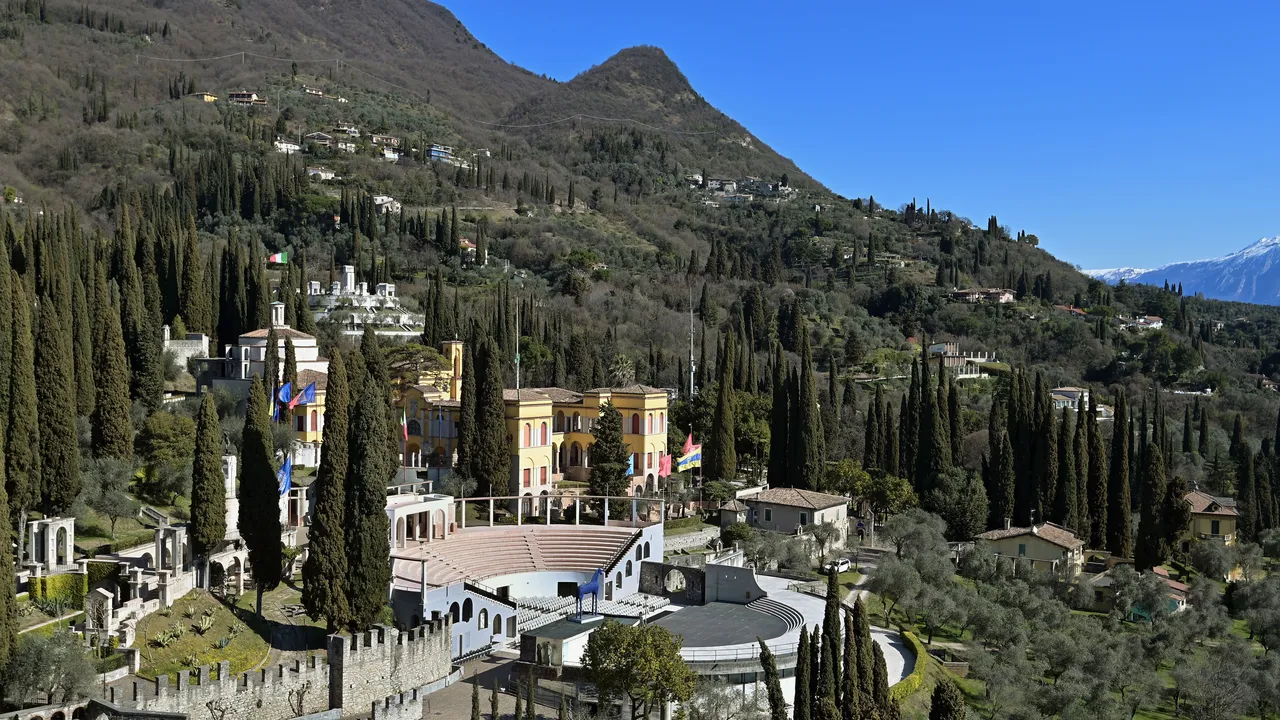
Each time I visit Venice, which is most frequently for the Biennale, I follow a series of traditions, including a solo aperitivo at the Hotel Danieli, where the eminent Italian poet, novelist, and war hero Gabriele D’Annunzio planned a breakfast for the Marchesa Casati—she, the socialite, arts patron, and former resident of what is now the Peggy Guggenheim Collection—to meet Giovanni Boldini, my all-time favorite artist. It was when the Marchesa’s signature strands of pearls broke and fell to the floor that the Italian painter locked eyes with his future muse, leading to a series of spellbinding portraits that would become the subject of my NYU Costume Studies master’s thesis. But this year, while the Hotel Danieli was undergoing renovations—it’s soon to become a Four Seasons hotel—I found thrilling Marchesa-approved alternatives, including a visit to her friend and lover D’Annunzio’s idyllic estate on Lake Garda.
As for Venice, I only had three days to visit the Biennale and the countless collateral exhibitions and events, so I had to be selective. Here is an accounting of my jam-packed week—and a few tips for how to spend your own trip to Venice.
Day 1: Biennale- and Bottega-Bound, Plus Jordan Roth’s Palazzo Performance
With only three days in Venice, it was crucial for me to visit the main Biennale sites in one day. My first stop was the Giardini della Biennale, which I liken to an art-world EPCOT. I made my way to the Central Pavilion, where the vision of Koyo Kouoh, the Biennale’s late artistic director, comes through most vividly. Kouoh, the executive director and chief curator of the Zeitz Museum of Contemporary Art Africa in Cape Town until her sudden death last year, made history as the first African woman selected to curate the Biennale. Kouoh conceived the 61st International Art Exhibition, titled “In Minor Keys” (open through November 22), as a musical metaphor: “If, in music, the minor keys are often associated with strangeness, melancholy, and sorrow, here their joy, solace, hope, and transcendence manifest as well,” the curator wrote in an essay. She added, “The 61st edition of the Biennale Arte is grounded in a deep belief in artists as the vital interpreters of the social and psychic condition and catalysts of new relations and possibilities.”
Throughout the exhibition were artists responding to traumas with work that encouraged healing through spirituality and nature. Dreamscape-inspired installations and an air of mysticism were pervasive, and I particularly took note of a vast array of textile-based works. (Favorites included those by South Africa-based artists Thania Petersen and Billie Zangewa, as well as Annalee Davis, who lives and works on the former Barbados plantation where her Creole family resided for generations.) Matching the whimsy of Davis’s embroidered and appliquéd works emblazoned with plant imagery (both conveying notions of femininity and climate urgency) were Beverly Buchanan’s tchotchke-covered Spirit Jars, which conjure the artist’s memories as a Black woman living in the South. These sculptures were influenced by the “memory jugs” left on unmarked African-American graves, often along with a memento from the deceased. Another standout was Cuban artist Maria Magdalena Campos-Pons’s eight-panel portrait of Kouoh and Toni Morrison, the first Black woman to win the Nobel Prize in literature, and resin and glass magnolia sculptures.
