

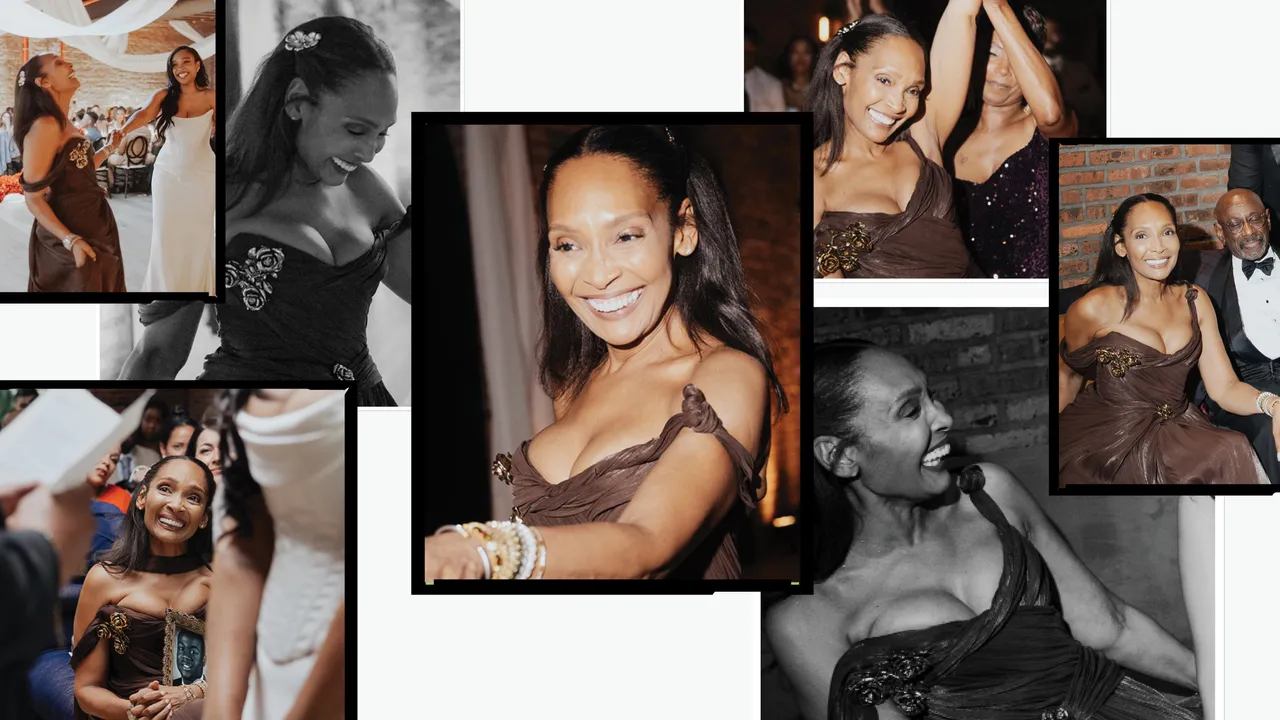
New York City-based creator Salina Williams avoided dental work most of her life. Finally, in her 50s and with her daughter’s wedding approaching, she decided she was done with the smile insecurity—not to mention physical discomfort—she’d been dealing with for years. So last fall, with the help of some laughing gas and a THC gummy, she had a full mouth reconstruction: 11 new upper teeth and 10 lower teeth using a combination of crowns, veneers, and an implant bridge. Here, 55-year-old Williams talks about the entire experience—the fear, the finances, the biggest surprises—in her own words.
“Growing up, my family wasn’t well off. We lived in in Brooklyn, and went to dental clinics that treated us poorly. That experience had an impact on how I felt going to the dentist as an adult. I’ve said to many people over the years that I had three children all natural [without an epidural], and I would rather give birth than go to the dentist. Even in my 50s, the physical discomfort and the mental part of dentistry still terrifies me.
I made sure I took care of my children’s teeth—everybody got braces. But my teeth were always crooked. I finally got braces at 40, and it was just the worst—they kept catching on my lips, I got food stuck in them, my mouth was always dry. After two years, I had them taken off. I felt good for six months—then my teeth started shifting. I’m not going to lie: I didn’t wear my retainer. I’d been suffering from gum disease and a tooth on the back right was deteriorating and couldn’t be saved, so it had to be removed. I ended up having to get an implant. Then menopause set in and things got worse. I felt like my teeth were loose and moving more. [Editor’s note: A loss of estrogen during menopause can leave teeth and gums more vulnerable to dryness, sensitivity, and gum disease, which can sometimes add up to teeth that shift more and, yes, even feel loose. And just as menopause causes bone loss elsewhere in the body, it can affect the jawbone that supports your teeth.]
As a content creator, I have control over the pictures I take. I learned how to smile and talk without really showing my teeth. I definitely knew how to pose, and whenever I knew a photo was being taken, my mouth was closed. But if I was out somewhere and I didn’t have control of the pictures that I was in, I would get anxious. I would always be thinking about how I was laughing and that my mouth was open and whether people see that there’s a side tooth missing or crooked or yellow teeth.
