

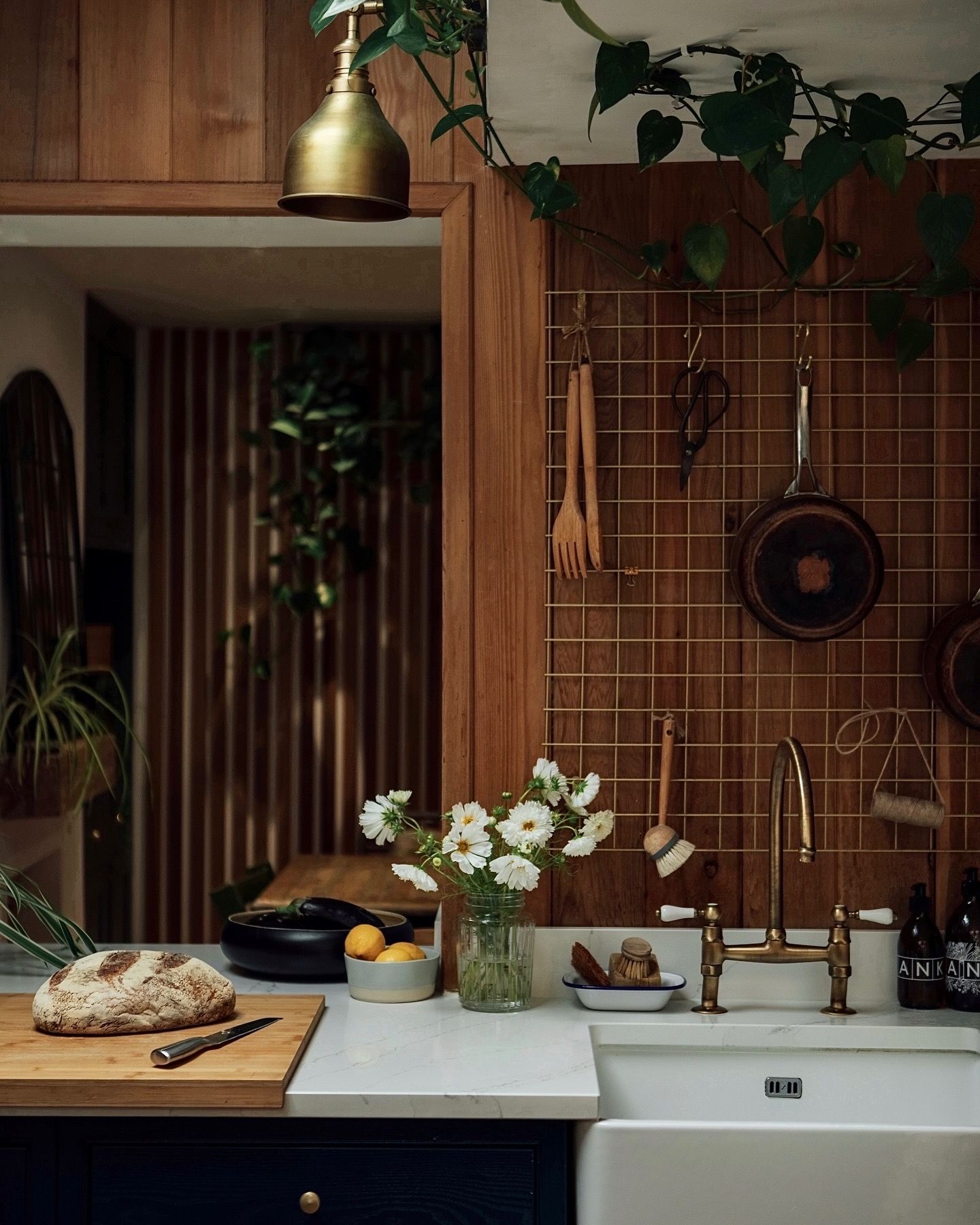
If you’ve spent any time exploring biophilic interior design, you’d be forgiven for thinking the formula is simple: add a few plants, introduce some wood, maximize natural light, and voilà, a wellness-enhancing home.
But the reality is far more nuanced. Because true biophilic design isn’t about what you add to a space — it’s about how that space responds to you.
Somewhere along the way, the philosophy has been distilled into a recognizable aesthetic: leafy corners, neutral palettes, organic shapes. And while those elements aren’t wrong, they only scratch the surface. At its core, biophilic design isn’t about plants, it’s about people — how we feel, function, and connect within the environments we inhabit.
Article continues below

Taking a moment to notice the dappled light shifting through the leaves is just as important — if not more so than where the plant is placed.
(Image credit: Marianna Popejoy Interiors)
Search for biophilic interiors online, and you’ll find a familiar visual language: expansive glazing, indoor greenery, warm timber finishes. It’s calming, aspirational, and highly shareable. But as Sharon Lomas (a designer and the founder of Design with Nature Retreats) points out, this aesthetic only tells part of the story.
“While these elements are undeniably biophilic, they only represent a small part of what is a much richer and layered approach,” she explains. “Biophilic design extends far beyond plants — it asks us to contemplate how a space feels, functions, and how informed design choices can support the occupants.”
In other words, it’s less about creating a look and more about creating a response. The risk of reducing it to mere styling is that we lose what makes it powerful in the first place — its ability to support wellbeing on a deeply human level.
What Biophilic Design Is Really About

Creating a sense of connection through carefully framed views — while still maintaining privacy — is a thoughtful way to balance openness with comfort in a functional living space.
(Image credit: Marianna Popejoy Interiors)
Now more than ever, our understanding of wellbeing has evolved. It’s no longer something separate from our surroundings, but something deeply intertwined with them.
As Fiona de Lys, founder of the Delysian Colour System®, color consultant, experienced trainer and speaker, who works with some of the world’s most innovative paint and interior brands, describes: “Our inner wellness is deeply intertwined with an introspective blend of psychology and interior design. This represents a paradigm shift — where function and purpose harmonize with materials and color, offering both experiential and sustainable benefits.”
This is where biophilic design moves beyond aesthetics and into something more personal. It becomes an individual dialogue between people and their spaces — one that supports identity, growth, and self-expression.
In short: rather than asking, “Does this look natural?” the question becomes, “How does this make me feel?”
Biophilic Design Is Not Just Visual — It’s Sensory

Fiona’s use of nature-inspired oil paintings proves just as effective as real plants, especially in spaces where natural light or room for greenery is limited.
(Image credit: Rachael Smith Photography LTD. Design: Fiona de Lys)
One of the most common misconceptions is that biophilic design is primarily visual. In reality, it engages all of the senses. “Feeling a connection to nature is intricate,” Fiona explains. “It involves recognizing emotion, time, and place, which in turn awakens our perceptual senses: scent, sound, taste, and touch.”
This sensory layering is what transforms a space from something you see into something you experience. Take color, for example. Often treated as a decorative afterthought, color psychology explains how it can play a powerful role in regulating how we feel within a space.

A common misconception in biophilic design is that every room should be painted green. Fiona demonstrates how spaces can feel just as connected to nature through cocooning and nature-inspired color palettes.
(Image credit: Rachael Smith Photography LTD. Design: Fiona de Lys)
“Color should be treated as a living, dynamic, and responsive element,” Fiona explains. “Identifying tones that intentionally enhance a desired narrative is where a transformation in ‘felt-life’ occurs.”
Her own home reflects this deeply personal approach — from a dramatic, cocooning red dressing room to a sun-warmed living space inspired by autumnal landscapes. With biophilic colors, each room is designed not just to look a certain way, but to evoke something.
While plants, light, and materials all play a role, the most meaningful biophilic spaces are shaped by personal connection. “If we draw upon our own lived experiences in nature — places we feel an affinity to, that calm and restore us — we can unlock a more personal and meaningful way of designing,” says Sharon Lomas.
This might be the memory of a windswept coastline, a forest walk, or the warmth of late afternoon sun in a particular place. These experiences act as an emotional blueprint — guiding design decisions in a way that feels intuitive rather than imposed.
“Allowing our senses to awaken and explore these experiences can help create spaces as unique as the individual,” she adds. “This is design that anchors us to those grounding places in nature we love.”

Maximizing natural light and views — particularly towards a garden — can fundamentally transform how a space is experienced, extending the sense of living beyond the interior.
(Image credit: Alexandria Hall. Design: Studio Milne)
For Ruth Milne, founder of Studio Milne, a London-based interior design consultancy, this translates into a careful balance of elements that shape how a space feels. “Biophilic design is about much more than simply adding plants,” she says. “It’s about creating a deeper connection to nature through light, space, materiality, and form.”
“I often draw on natural colors, textures, and shapes, layering materials and gentle curves to create warmth and comfort,” Ruth explains. “Green, in particular, is incredibly grounding and easy on the eye.” It’s a subtle approach — one that doesn’t shout, but quietly shifts the atmosphere of a space.

Interiors that soothe the nervous system can include everything from soft, curved forms to thoughtful use or avoidance of certain colors and layouts that prioritize both safety and comfort.
(Image credit: Nikki Hinton. Design: Furnishing Futures)
When biophilic design is reduced to styling, it loses its depth — and its impact. But when it’s approached as a philosophy centered around people, it has the potential to transform not just how a space looks but how it supports everyday life.
To understand this at its most meaningful level, I spoke to Emily Wheeler, founder of Furnishing Futures — a London-based charity creating trauma-informed homes for survivors of domestic abuse. Their work combines social care with design, proving just how powerful human-centered spaces can be.
“To be trauma-informed means to understand the impact of trauma on the mind and body,” Emily explains. “Design is guided by principles that reduce the risk of triggering a stress response, while soothing the nervous system through carefully considered choices tailored to each individual.”
She also highlights the connection to biophilic design: “Although not the same, trauma-informed design has many parallels,” she explains. “By fostering our innate connection to nature, we can support nervous system regulation and create environments that feel safe, calm, and restorative.”

TASCHEN
Green Architecture Photobook

Gestalten
The House of Green: Natural Homes and Biophilic Architecture

Wiley
Biophilic Design: The Theory, Science and Practice of Bringing Buildings to Life
The takeaway is simple: biophilic design isn’t something you can replicate with a checklist. It’s not about adding more — more plants, more textures, more ‘natural’ elements (beware of ‘wellness washing’) — but about being more intentional with what’s already there.
Start by paying attention to how your space feels at different times of day. Notice where light falls, how air moves, and where you naturally gravitate. Think about the environments in nature that make you feel most at ease — and why.
From there, biophilic design becomes less about following trends and more about creating alignment between your space and your senses. As Sharon Lomas puts it: “It’s a blueprint to create spaces that can reduce stress, boost creativity, and support both physical and mental wellbeing.”
For more design advice, make sure to subscribe to Livingetc’s newsletter.
