

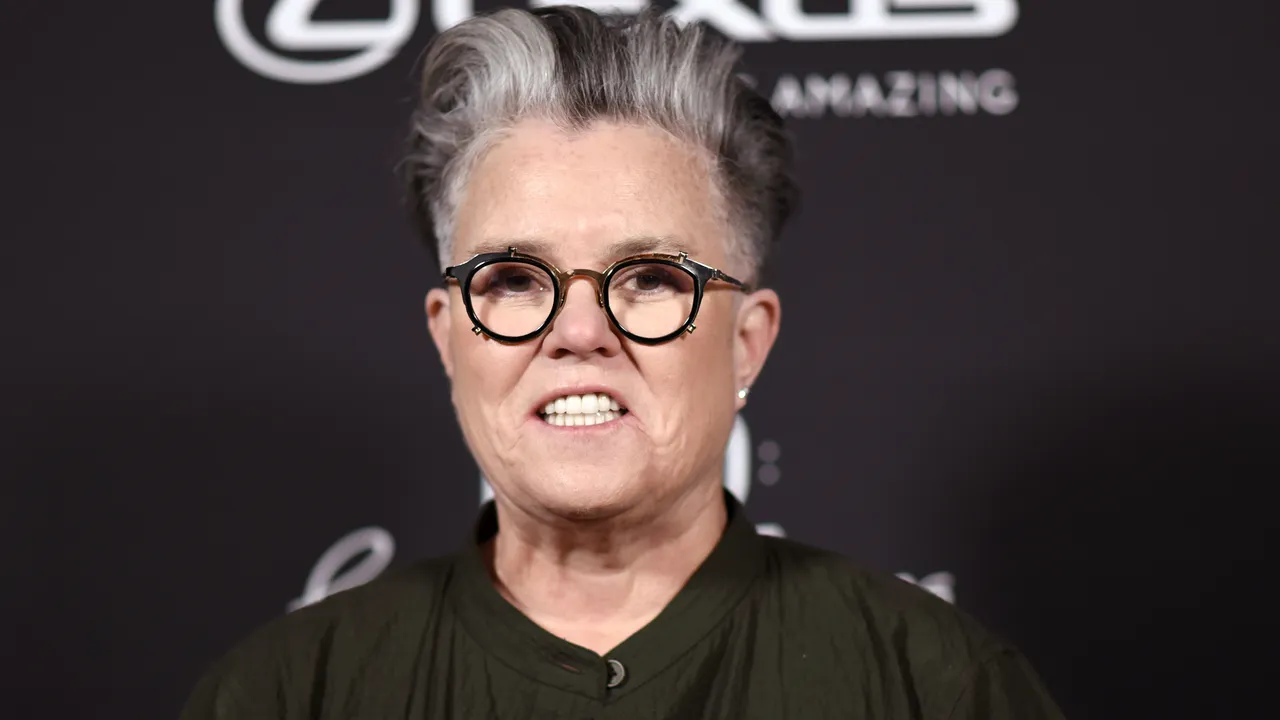
Rosie O’Donnell got a facelift—and she wants to talk about it.
The comedian and actor revealed that she had a lower deep-plane facelift in January 2026 and has complicated feelings about the entire process, which she shared in her now-signature poetic style on Substack. In the post, titled “decisions,” O’Donnell wrote that in the past, she swore she’d never go under the knife, but after losing 50 pounds, she changed her mind.
“I used to feel very strongly about facelifts,” O’Donnell wrote. “Not casually – morally. I had assigned myself as head of all women who would never – ever”. She went on to say that getting a facelift felt like a “betrayal” of feminism and aging, even of “our team of women worldwide.” But after losing weight, O’Donnell said her face had changed—she uses the phrase “melting with intention” to describe it—and though she tried to accept it, she couldn’t. “There’s a point where acceptance starts to feel like lying.”
O’Donnell’s 13-year-old child Clay found out that their mother was contemplating a facelift and had some thoughts about it too, saying O’Donnell “earned” her wrinkles and that young women look up to her. What kind of message would she be sending about aging and accepting yourself as you are if she got plastic surgery? Then, Clay told O’Donnell (with “strong effect”): “‘I wouldn’t be able to respect you if you did it.’” According to O’Donnell, Clay sounded “exactly like me. Like my younger, more certain, more morally rigid self had somehow moved into my house and was now judging my face.”
O’Donnell sat with the idea of a facelift for a few months, then realized that not doing it would also be teaching Clay a lesson. “If I’m teaching clay anything, it can’t be that my body belongs to an idea either,” she wrote. “Even a good idea. Even feminism. Because that’s still not freedom— that’s just a different authority telling you what you’re allowed to do with your own face.” (Her words echo those of Allure contributor, Joan Kron, who said of her three facelifts: “The feminist line is, ‘We’ve earned these wrinkles. We don’t want to erase them.’ Well, I’m a feminist, but I don’t believe in telling people what to do with their bodies.”)
She eventually did get the surgery, choosing a doctor who had worked on some of her friends to a subtle but noticeable effect. “I wanted to still be me, just… less haunted. And I do look like me… a slightly more well-rested emotionally stable version of me.” But after all that deep self-reflection and grappling with her decision, O’Donnell says no one has even noticed she had work done. “I went through a full existential feminist crisis, had my face and neck surgically altered, and the result is… zippo.”
But O’Donnell is fine with that, she says, calling it the “best possible outcome” for herself. “I didn’t disappear, I didn’t become someone else— I just stopped arguing with the mirror. And maybe that’s enough. Or at the very least… it’s what a lower deep plane face lift [sic] looks like when it minds its own business.”
We’re not entirely surprised that O’Donnell chose a deep plane facelift, as the technique has become part of our modern plastic surgery vernacular; facelifts in general have become the trending surgical procedure, with tons of chatter about which celebrities went under the knife and exactly which techniques their surgeons may have used. During a deep plane facelift, a surgeon will reposition ligaments under the SMAS (a layer of tissue that covers the facial muscles) of the face for a lifted look.
