

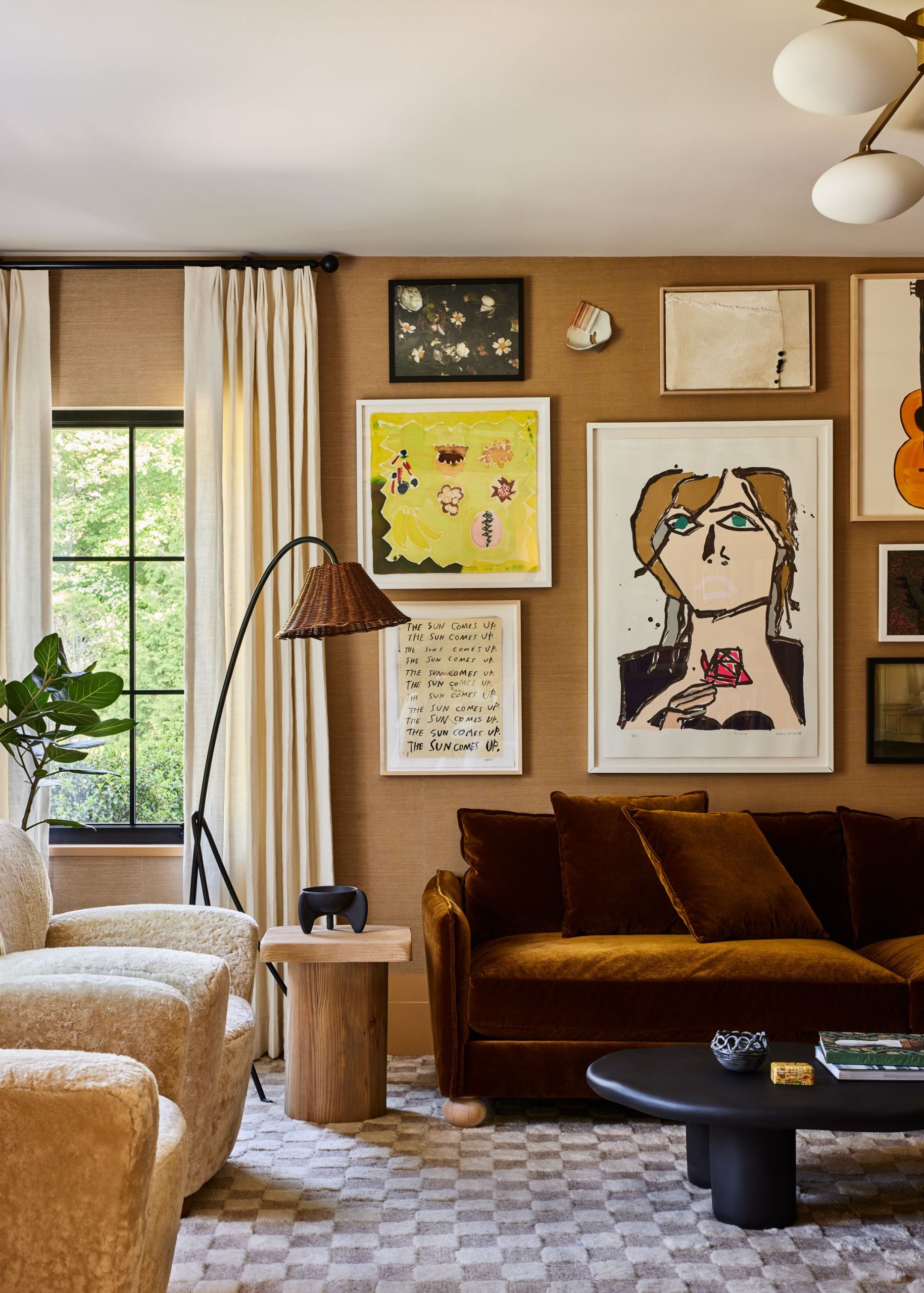
They might span multiple US states and vary in genre, but if there’s one thing that keeps the homes, furniture designs, and sculptural pieces garnered by Sarah Sherman Samuel: The Intersection of Art and Design — the Michigan-based powerhouse’s latest book — it’s their ability to immediately envelop you in a strangely familiar and uplifting sense of warmth.
“I believe that as you create your home, your home has a hand in creating you,” the interior and furniture designer and artist writes in the opening pages of the new interior design book, which was released last month.
The quote is more than a poetic passage: for Samuel, whose multidisciplinary studio SSS Design promotes the belief that “a home should be a true reflection of its inhabitants”, the relationship between people and their domestic environment is reciprocal. Our stylistic choices might influence how a space looks, but, ultimately, it’s the way a place makes us feel that we’ll remember most, as she recounts below.


SSS Design debuted in Los Angeles in 2014 and currently finds its home in the lush woods of West Michigan while active across the US.
(Image credit: Amy Carroll)

Sarah Sherman Samuel
SSS Design is a multi-disciplinary design studio founded by Sarah Sherman Samuel, focused on the intersection of interiors, architecture, art, and product development. Deeply inspired by the natural world, Sarah looks to nature’s juxtaposition of materiality, pattern, texture, and patina to inspire a grounded yet organic feeling in the spaces she designs. Her work follows a wabi-sabi approach, finding authenticity in the unexpected and warmth in the imperfect. She believes that a home should be a true reflection of its inhabitants, a sanctuary whose story will unfold alongside its owners.
What’s One Thing You Can’t Shake Off Your Mind Recently?

CONTEMPORARY COLONIAL, Short Hills, New Jersey, a project featured in Sarah Sherman Samuel’s new book Sarah Sherman Samuel: The Intersection of Art and Design, published by Abrams Books Photographs.
(Image credit: Nicole Franzen. Design: SSS Design)
“I’ve been thinking a lot about the idea of designing for emotional resonance rather than designing around a singular style or trend. In today’s interior design landscape, we’re surrounded by endless imagery and instant inspiration, which can sometimes lead to spaces that look beautiful but don’t necessarily feel personal or emotionally connected.
“I think people are increasingly craving interiors that feel grounding, layered, and deeply human. For me, emotional resonance comes from the relationship between material, atmosphere, memory, and storytelling. It’s the feeling a space leaves you with, more than the immediate visual impression. That can come through texture, natural light, scale, patina, softness, or even the tension between old and new.”
What is the Benefit of This Approach to Interiors?

“A home should not only function beautifully; it should create a sense of connection, comfort, memory, and resonance.” In the picture: CONTEMPORARY COLONIAL, Short Hills, New Jersey, a project featured in Sarah Sherman Samuel’s new book Sarah Sherman Samuel: The Intersection of Art and Design, published by Abrams Books Photographs.
(Image credit: Nicole Franzen. Design: SSS Design)
“Designing for feeling shifts the focus away from creating a ‘perfect’ room and toward creating one that feels lived in, personal, and lasting. I think the most compelling interiors are the ones that reveal themselves slowly. They aren’t overly polished or overly themed. Instead, they create mood and connection through layering and restraint.
“Practically, that can mean prioritizing tactile materials, thoughtful lighting, natural variation, vintage pieces with history, meaningful art, or architectural moments that create rhythm and intimacy. I love it when I discover small touches that share a bit of someone’s story. A framed written note by a loved one, hand-painted murals that include details from a childhood, or a color incorporated from a certain memory.
“I also love customizing pieces that aren’t typically customized to add a layer of thoughtfulness to a space. Working with a metalworker to create a custom door handle with motifs that are reflective of the family, or commissioning an artist to hand-paint inside jokes on tiles for a bathroom, or embroidering a bedcover with nature elements from the homeowner’s favorite landscape. All these types of creative details are what ultimately give a space depth and feeling.”
How Does This Vision of Design Translate Into Your Projects?

MCM ON THE CREEK, Cascade, Michigan, a project featured in Sarah Sherman Samuel’s new book Sarah Sherman Samuel: The Intersection of Art and Design, published by Abrams Books Photographs.
(Image credit: Nicole Franzen. Design: SSS Design)
“Across my interiors, furniture, and ceramic work, I’m always looking for ways to create that sense of emotional connection through materiality and atmosphere. In many of my projects, I use hand-applied finishes like limewash or plaster because they bring softness and movement that changes throughout the day, like they have a life of their own.
“I’m also drawn to materials that feel grounded and substantial, like travertine, walnut, marble, and ceramic, but I often balance that weight with softer gestures, curved forms, textiles, or sculptural details. My recent collection Weight & Wonder explored that tension directly: how solid materials can still feel light, expressive, and emotional. Even in my ceramic practice, the appeal is tied to this idea. Clay records the hand in real time. It holds imperfection and process in a way that feels incredibly human and honest to me.”
What’s the Greatest Lesson This Type of Scheme Holds?

“I believe that as you create your home, your home has a hand in creating you.” In the picture: MCM ON THE CREEK, Cascade, Michigan, a project featured in Sarah Sherman Samuel’s new book Sarah Sherman Samuel: The Intersection of Art and Design, published by Abrams Books Photographs.
(Image credit: Nicole Franzen. Design: SSS Design)
“I think the main takeaway is that the best interiors are rarely the ones chasing trends: they’re the ones that make you feel something. That might mean slowing down and thinking more intentionally about texture, light, materiality, and the emotional tone of a space rather than just its visual impact. It can also mean allowing for imperfection, collecting pieces over time, and creating contrast between refinement and rawness, and really celebrating the human hand in creating.
“I hope people remember that design has the ability to shape how we feel in our everyday lives. A home should not only function beautifully; it should create a sense of connection, comfort, memory, and resonance.”

Abrams Books
Sarah Sherman Samuel: the Intersection of Art and Design
Your guide to a home rooted in feeling, Sarah Sherman Samuel: the Intersection of Art and Design brings you a selection of some of Sarah Sherman Samuel’s most captivating projects across interiors, product design, and bespoke art.
For more interior design approaches sure to breathe new life into your home, revisit our recent conversation with Nurture by Nature’s Kate Swanson, or head to our emerging designers pages to expand your inspiration across furniture-making and sculptural arts.
Because, as demonstrated by the latest edition of London Craft Week, handmade furniture is back in.
