

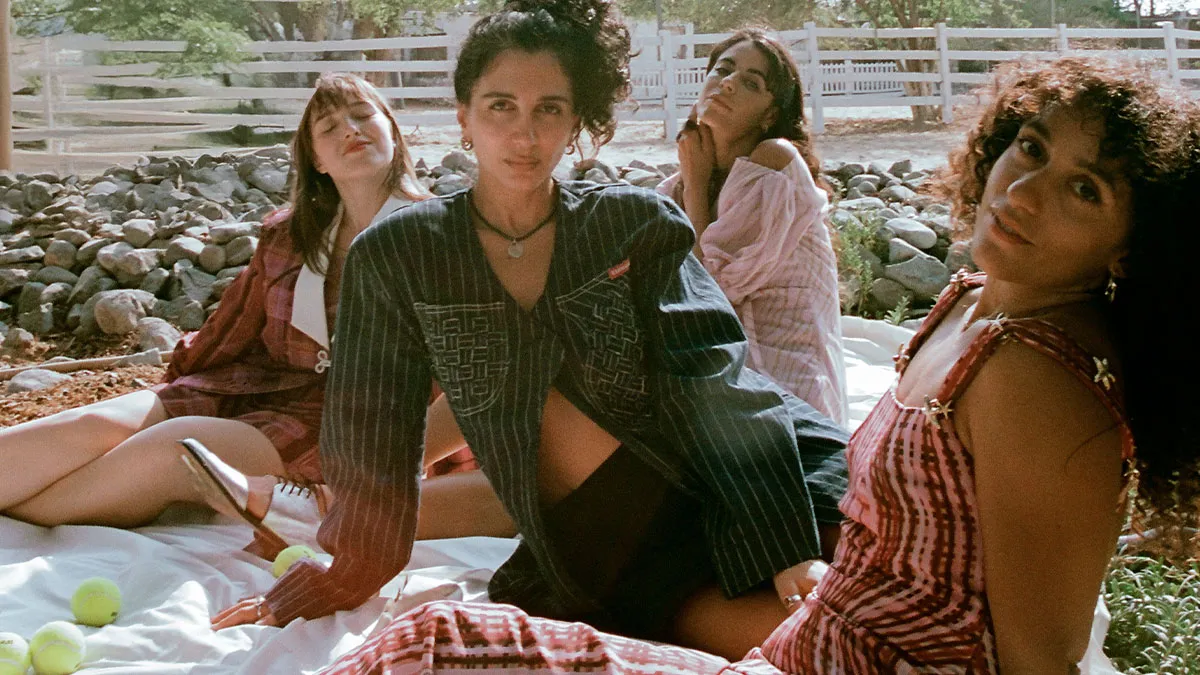
On May 1, The Giving Movement, a Dubai-born label known for its elevated streetwear, began stocking a curated selection of emerging homegrown brands in its store in City Walk Mall. “The Movement Edit” is designed to showcase UAE-based brands, including skincare label Sade and headwear brand Hattitude.
It’s not the only retail spot in Dubai platforming local brands. The Edit Dubai, a conscious fashion space, recently hosted a pop-up for six UAE-based designers, offering them retail space and visibility for a week. Meanwhile, Vogue Arabia has launched #BuyEatStayArabia, a curated guide spotlighting homegrown labels, restaurants, and staycation destinations across the region.
At a larger scale, Majid Al Futtaim, one of the Middle East’s largest retail and leisure groups, based in Dubai and operating across the region, is formalizing its role in shaping the UAE’s retail pipeline. In partnership with Dubai SME, part of the Dubai Department of Economy and Tourism, the group has launched Ma’an (“together” in Arabic), a platform designed to integrate UAE-based entrepreneurs into its ecosystem — spanning assets such as Mall of the Emirates and Vox Cinemas. Announced at the start of April, the initiative opened applications to small businesses, with the first cohort set to be unveiled in due course.
Across media, retail, and government in the UAE — a country that has always been known for its penchant for international luxury goods — the message is increasingly aligned: homegrown is no longer a niche narrative. This momentum is being shaped, in part, by wider geopolitical uncertainty. The Iran war has accelerated both consumer behavior and institutional focus toward proximity, identity, and resilience. This shift is also driven by a more self-assured local consumer seeking cultural relevance, alongside the UAE’s emergence as a creative hub rather than a simple retail destination.
“There has been growing local pride in the last few years,” says Rania Mansri, CEO of The Giving Movement. For her, homegrown fashion sits at an inflection point. “In difficult times, people naturally come together and support each other, so this moment accelerates that shift.”

For international players, this means adopting more considered localization strategies. Such as integrating local creative talent, developing culturally resonant collaborations that go beyond seasonal Eid campaigns, and building more nuanced forms of consumer engagement. “But all brands, whether homegrown or international, need to think local in this region,” Mansri adds.
Dressing the shift
It’s a sentiment that spans all countries in the Gulf region: Bahrain, Kuwait, Oman, Qatar, Saudi Arabia, and the UAE. Kuwait remains one of the Gulf’s most fashion-forward and discerning luxury hubs, yet it has also navigated a politically complex environment in recent years, even before wider regional tensions accelerated. While this has impacted retail cycles, it has not shifted the behavior of Kuwait’s high-net-worth consumer, who continues to prioritize distinction and individuality in their buys — and is increasingly looking to local brands to do so.
