

In urban environments, green spaces aren’t just nice to have — they’re essential. But when we’re all so pushed for space, it can be tricky to know where to squeeze one in. Which is exactly why so many city gardeners are embracing the idea of a ‘pocket garden’.
Not just another term for a small urban garden, these little bursts of greenery are all about making the most of what you’ve got, and finding ways to add some life into the corners we’d typically forget about. And this isn’t just for aesthetic reasons either (though they certainly help with that, too) — studies have shown that those with less access to green spaces are 55% more likely to struggle with mental health problems. Plus, experts suggest that introducing more greenery in built-up cities can help to minimize the environmental impacts of the Urban Heat Island effect.
And that hardly even scratches the surface of the positive effects that this garden trend can bring. As city-dwellers, it can be all too easy to feel as though agrarian pursuits are inaccessible to us, saved for those out in the country, with the freedom and luxury of endless expanses of land. But, as trends like this show, there is no place too small to reap the benefits nature can offer.
Article continues below
What Is a Pocket Garden?

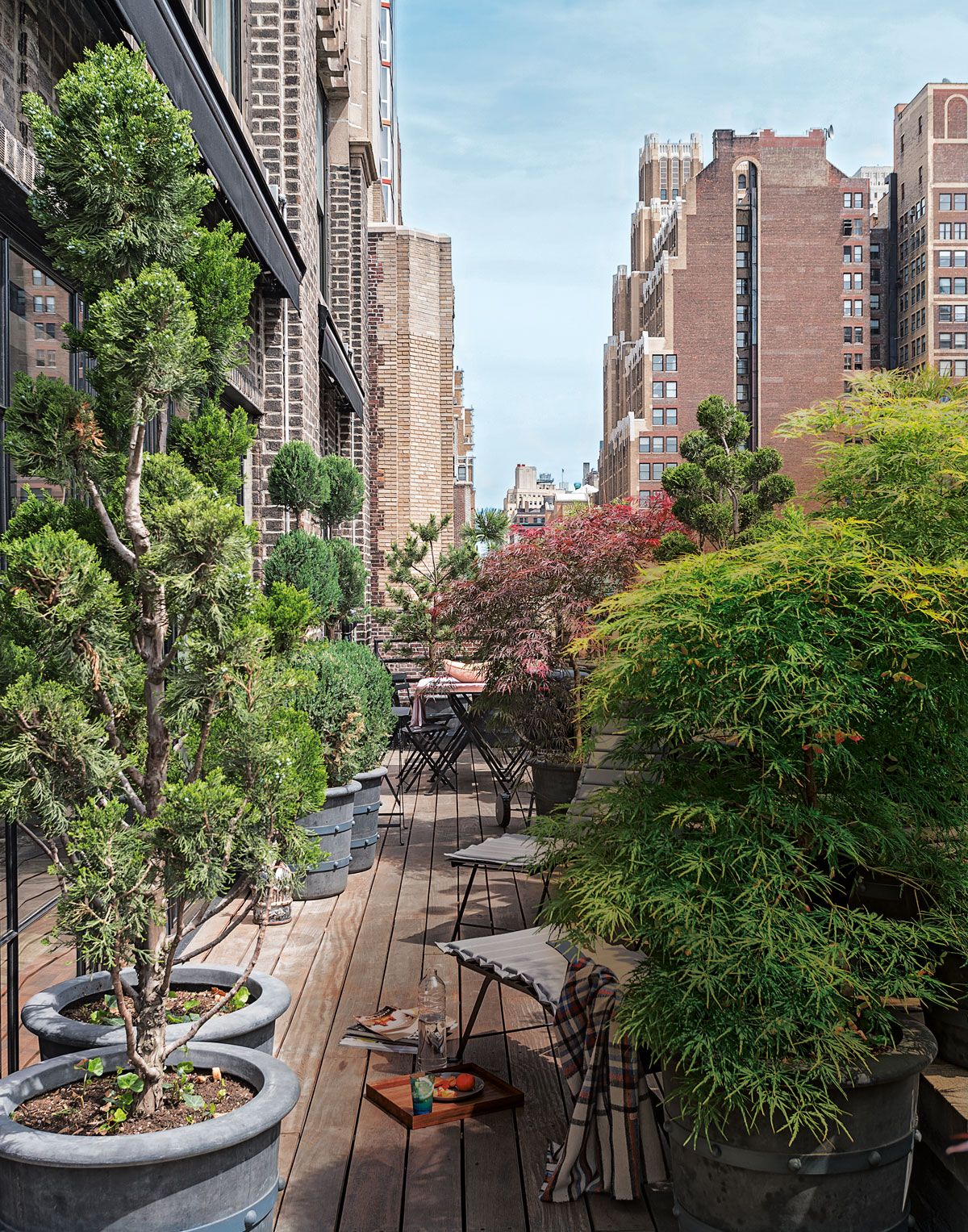
In modern apartment buildings where your only outdoor space is on the roof, a pocket garden can be a particularly useful addition.
(Image credit: Kate Jordan. Staghorn NYC)
Before we encourage you to build your own pocket garden, perhaps it would be best to outline exactly what the term refers to.
Bart Havercamp, one part of the agricultural duo Bart + Pieter, known for their commitment to bringing more biodiversity to urban environments, says, “A pocket garden is a small, intensively cultivated, and often artistic green space designed to turn underutilized urban or residential spots — like alleyways, corners, or containers — into lush, productive areas.”
Even if this is your first time encountering the term, you’ll likely have already come into contact with one of these spaces, especially if you’re living in a built-up, modern city. Squeezed into pavement corners and the rooftops of high-rise blocks, these plots of vegetation are designed to provide the public with moments of respite from the concrete jungle, often including some form of outdoor furniture or seating, encouraging passers by to stop and soak up the greenery.
The key to these spaces is that the same amount of thought and consideration has been given as one would to any other modern garden idea. As landscape designer, Kat Aul Cervoni, tells me, “I think of these as magical little standalone gardens or vignettes in an outdoor space.” They encourage you to find the beauty in the small moments, developing an appreciation of how nature can be incorporated in all spaces, no matter how small.
Bart Havercamp
Some refer to the duo as green guerillos, for they consider it their mission to offer a counterbalance to the raging and rapid pace of the city. Others compare them to the A-team when they block traffic in para commando style and lift a tree on top of a building. In whatever challenge they undertake, raising nature values en bringing more biodiversity into our environment is a constant factor.
What Are the Benefits of Pocket Gardens?

If you’re limited on floor space, why not create a pocket garden using a vertical garden instead?
(Image credit: Denilson Machado. Design: NJ+ Architects)
When you pass by one of these designs, it’s easy to write them off as purely decorative, something designed to bring some color to an otherwise monochromatic space. And while they certainly do achieve this, their benefits go far beyond what meets the eye.
“These gardens boost biodiversity, offer relaxing sanctuaries, and are used to enhance aesthetics by softening hardscapes with pollinator-loving or edible plants,” explains Bart.
A shift in priorities has seen a significant rise in biodiversity-centered gardening trends, such as the popular ‘messy gardening’ approach, and a general focus on utilizing local plant species. This trend is an extension of this, offering urbanites a new way to support their local ecosystem.
For those living in small apartments, a pocket garden can also act as an easy way to change the atmosphere of your home. When all you have to work with is a balcony, your gardening options are undeniably limited, and, as a result, you can easily end up abandoning this outdoor space entirely. A pocket garden offers a chance to make the most of this space, no matter how small it may be. As Kat says, “Pocket gardens are a great way to make use of underutilized areas and can also completely change how a small space feels.”
As well as a lack of space, one of the biggest deterrents to gardening for urbanites is the time commitment required. However, as Kat explains, “because pocket gardens are compact by nature, they’re often more manageable to maintain while still delivering a big visual impact.”
How to Design Your Own Pocket Garden

For gardening novices, a pocket garden can be a less-intimidating starting place.
(Image credit: Bradley Van Der Straeten)
First things first, before you start dreaming up grand plans for your own pocket garden, you need to select the plot of land you intend to use. This could be an easy choice — perhaps there’s an obviously underutilized nook in your outdoor space — but for some, this may require some more thought.
“If you don’t have a spot in mind, you can also start by thinking about how you want to use the space to help inform its location, size, and design,” Kat advises. Try identifying your main goals for this green patch — whether you envision it as a place to sit and unwind, or just something to bring a bit of life and softness to your space.
From there, it can be helpful to choose one central element to base your design around. As Kat explains, “Pocket gardens usually have a clear focal point — like an interesting specimen plant, a bench, or a small water feature — plus layered planting, and a sense of enclosure that makes the space feel intimate and tucked away.” Beginning your design with this focal point clearly outlined can make the whole process feel easier, offering you a foundation to build upon and a clear boundary to work within.
Although the space will be inherently limited, you should still aim to build depth and complexity within these confines. The key to this is finding the balance between building a varied planting scheme, without it looking too busy or overwhelming.
“I recommend keeping the planting palette relatively simple, and layer plants at different heights so the space feels nice and full without feeling crowded,” suggests Kat. Instead of trying to squeeze as many different species as possible into one small space, try creating complexity through adopting a layered technique, introducing different levels to your design, with varying plant heights and sizes.
You can achieve more than you may initially expect in these limited confines. As Kat notes, “Even in a small area, you’ll often see a mix of structure (like a small tree or border shrubs), softer planting, and sometimes a simple place to sit like a garden bench or cafe table and chairs.”
When it comes to the exact plants you choose to include in your pocket garden, there is a certain amount of freedom and creative control in this decision. This is a chance for you to explore your own preferences, selecting the shrubs and flowers that speak to you.
Though if you’re searching for a basic outline to follow, Kat tells me, “I tend to lean on a mix of small trees or structural shrubs paired with reliable perennials and ornamental grasses to create depth and movement.”
This varied combination ensures a more complex, visually intriguing design without requiring too much effort. Bringing in some evergreen shrubs and climate-resilient plants is always a good idea, especially in a space as small as this, where each element has to make an impact. Search for species with longer bloom times, like hydrangeas. Rely too heavily on super-seasonal blooms, and you’ll be left with a pocket garden that looks gorgeous for two weeks and underwhelming for the rest of the year.

Habitat
Habitat Teka Metal Garden Chair – Green
Turn your pocket garden into a space for rest and relaxation with a comfortable outdoor sling chair. This design perfectly complements a verdant planting scheme and looks far more expensive than it is.

H&M
Metal Plant Pot on a Stand
A tall plant pot, like this, makes creating a layered planting scheme hassle-free. Just pair it with some low, bowl-like planters, and you’ve got instant depth and complexity.

Primrose
Primrose 60cm Silver Brushed Stainless Steel Fountain Sphere
Take your pocket garden to new heights by introducing a small water feature like this. The sound of running water will make it feel even more relaxing, and the simple design offers a modern feel.
Living in a city, it’s all too easy to forget just how important green spaces are for both our mental and physical health. Luckily, the experts have shared plenty of ways to design a small garden that will help you turn a tiny space into a flourishing oasis.
And for more design ideas and inspiration, subscribe to our newsletter, and all the latest will be delivered straight to your inbox.
