

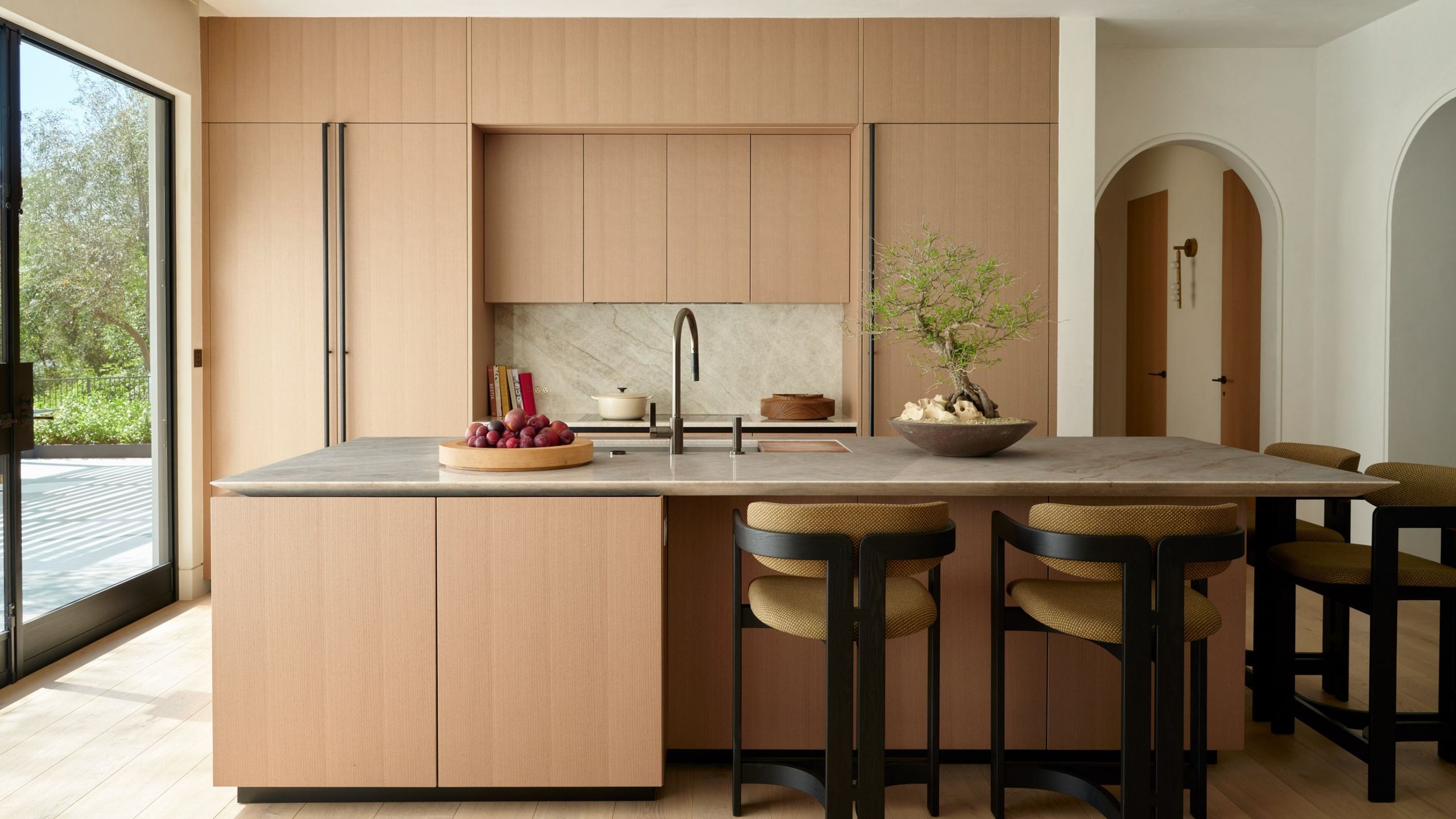
I recently had a designer tell me they’re a huge fan of incorporating ‘timed’ design in their interiors. Moreover, they don’t believe we should ever really strive for a strictly ‘timeless’ home. As a design writer, you can imagine my intrigue. What do you mean, timeless isn’t ideal? After further explanation, the notion actually makes a lot of sense. A truly stylish home should ultimately be a blend of your own unique, contemporary (‘timed’) style and the classics that have continuously inspired us (‘timeless’).
“For me, timed design is the acknowledgement that every interior belongs to a particular moment in a person’s life,” explains interior designer Juliana Custers, who introduced me to this idea. “We often talk about creating ‘timeless’ homes, but the reality is that our lives move in chapters. We are different people at 30 than we are at 50, and our homes inevitably reflect those shifts.”
As interior design trends evolve, so do our tastes, and that’s okay. Timed design is about leaning into the personal moments that make a house a home and embracing individuality. Often, you’ll be influenced by past design movements, too, and that’s okay. Here’s how to achieve the perfect balance of both.

Timed vs Trend-Led Design

Pieces of this room feel very modern, but when all styled together, the room reads more as a harmonious blend of design movements.
(Image credit: Alice Mesguich. Design: Le Cann)
Timed design and trend-led design may sound like synonyms, but there is nuance to it. First, it’s crucial to understand that design operates at different speeds. Architecture changes slowly, interiors evolve more quickly, and fashion moves faster than both. “Timed design sits somewhere between these worlds,” Juliana Custers tells me. “It embraces the idea that a home should respond to who you are today, while allowing room for who you might become tomorrow.”
“There is something quite beautiful about looking back at a room you once loved and recognizing it as a reflection of a particular time,” she adds. It doesn’t make the interior design style wrong because it no longer feels current. Instead, it becomes a record of that moment, much like music, art, or photography can capture a period in our lives. It’s safe to say that this point of view definitely can make us feel better about ‘dated’ choices, like 2016 interior design trends.
More importantly, timed design isn’t about chasing trends. Trends are often external influences that tell us what is fashionable right now. Timed design is much more personal — that difference is intention. For instance, it looks more like an analogue moments that cater to your hobbies, like listening rooms or game rooms.
“Timed design starts with the people who live there, their habits, aspirations, collections, memories, and way of life,” says Juliana.

Juliana Custers is a London-based interior designer and the founder and creative director of her design studio, Juliana Custers. Juliana is a BIID registered designer (British Institute of Interior Design) and has a background working in architecture, holding positions in both interiors and architectural practices.
Why a Strictly ‘Timeless’ Interior Isn’t the Goal

The base of this room is very traditional, but the modern elements make it more interesting.
(Image credit: Jeremy Wilson. Design: Marianne Tiegen)
So, where does this leave ‘timeless’ design? Well, Juliana doesn’t think it actually even exists. “There is a time stamp on every interior intervention,” she says.
And it’s true, every era leaves its mark on design. Even the interiors we now consider ‘timeless’ were once unmistakably contemporary. Mid-century modern furniture is a perfect example. “Individual pieces have endured remarkably well, but when arranged together, they instantly evoke a particular period in history,” she says.
The pursuit of truly timeless furniture and overall timelessness can sometimes make us too cautious when it comes to design, which ultimately leads to a rather boring home. It’s harsh, but it’s true. “We become so concerned about making the ‘right’ decision that we strip away personality and character,” says Juliana.
We get so caught up in the fear of things dating, like millennial green or patterned sofas, that it all becomes very safe. Instead, we should search for meaning, memorability, or an emotional connection.
What we can achieve, according to Juliana, is longevity. For example, certain materials, proportions, and craftsmanship have an enduring appeal because they age beautifully. Natural stone, solid timber, unlacquered brass, and well-made upholstery tend to improve with time rather than date because they absorb knocks, bumps, and variations so well.
“The goal shouldn’t be to create something that never dates,” she says. “It should be to create something that continues to feel relevant and enjoyable as it evolves. Time is unfortunately unavoidable, and that’s what makes it so relevant.”
How to Curate the Right Blend

The brushed steel and terrazzo worktops are very contemporary choices, but blended with the natural materials and color palette, it’s perfectly balanced.
(Image credit: Jeremy Wilson. Design: Marianne Tiegen)
So now the big question is, how do we actually achieve this? What does a blend of longevity and meaningful relevance actually look like in an interior, and how does it differ from incorporating a few of your favorite design or color trends?
Well, take the current popularity of warm brass fittings, for example. “Brass itself is not new — it has been used for centuries,” says Juliana. “However, the way we are using it today feels distinctly contemporary.”
What makes one timed versus timeless is the finish. Lacquered brass is preserved exactly as it was installed, freezing it in a particular moment. Unlacquered brass develops a patina through touch, use, and time. “It records the life of the home and becomes more personal as it ages,” says Juliana. There’s more personality.

EcubedStudioUK
Mid Century Danish Brass Candleholder Pair

This space is characterful, but elevated, achieving both a timeless and timely look.
(Image credit: Anson Smart. Design: Flack Studio)
Similarly, a highly trend-driven color palette (think: oxblood color trend or sour greens) applied throughout an entire house might feel very tied to a particular moment.
But if you invest in beautifully crafted furniture, natural materials, and quality joinery, “you’re creating a foundation that can evolve as tastes change around it,” says Juliana. It makes experimentation more grounded.

Dunelm
Lavina Glass Tiled Coffee Table

Though there is a clear 70s influence, the base of this room has beautiful craftsmanship, so the furniture and decor can adapt with time.
(Image credit: Malissa Mabey. Design: Yond Interior)
Juliana suggests starting with a strong architectural foundation through material, joinery, and layout. Contemporary elements can then be introduced through artwork, lighting, upholstery, color, and accessories, which are easier to refresh over time.
There isn’t a fixed formula for the balance. “It depends entirely on the client and the story of the house,” she says. “A young family will have different needs from a retired couple, and a Victorian townhouse requires a different approach from a contemporary coastal home.”
The designer is currently working on a project inspired by mid-century modern design. “The clients love the architecture and furniture of that period, but we don’t want the house to feel like a time capsule,” she explains. “The challenge is to capture the optimism, simplicity, and craftsmanship of mid-century design while creating something that feels relevant to the way this family lives today.”
A home without history or permanence can feel one-dimensional, while a home that relies entirely on heritage references can feel frozen in time. The magic often happens in the balance between the two.
“If we’ve done our job properly, the home will continue to evolve with them over the coming decades, not because it’s timeless, but because it’s adaptable,” says Juliana.

Westwing Collection
Leather Armchair Dion
“Of course, contemporary influences will always find their way into a project. That’s inevitable,” says Juliana. But the goal isn’t to recreate what everyone else is doing; it’s to create a home that feels relevant to the people living in it at this moment in time. Draw on your decor for cryin’ out loud! And give your space room to feel your own.
For more inspiration like this, be sure to subscribe to the Livingetc newsletter.
