

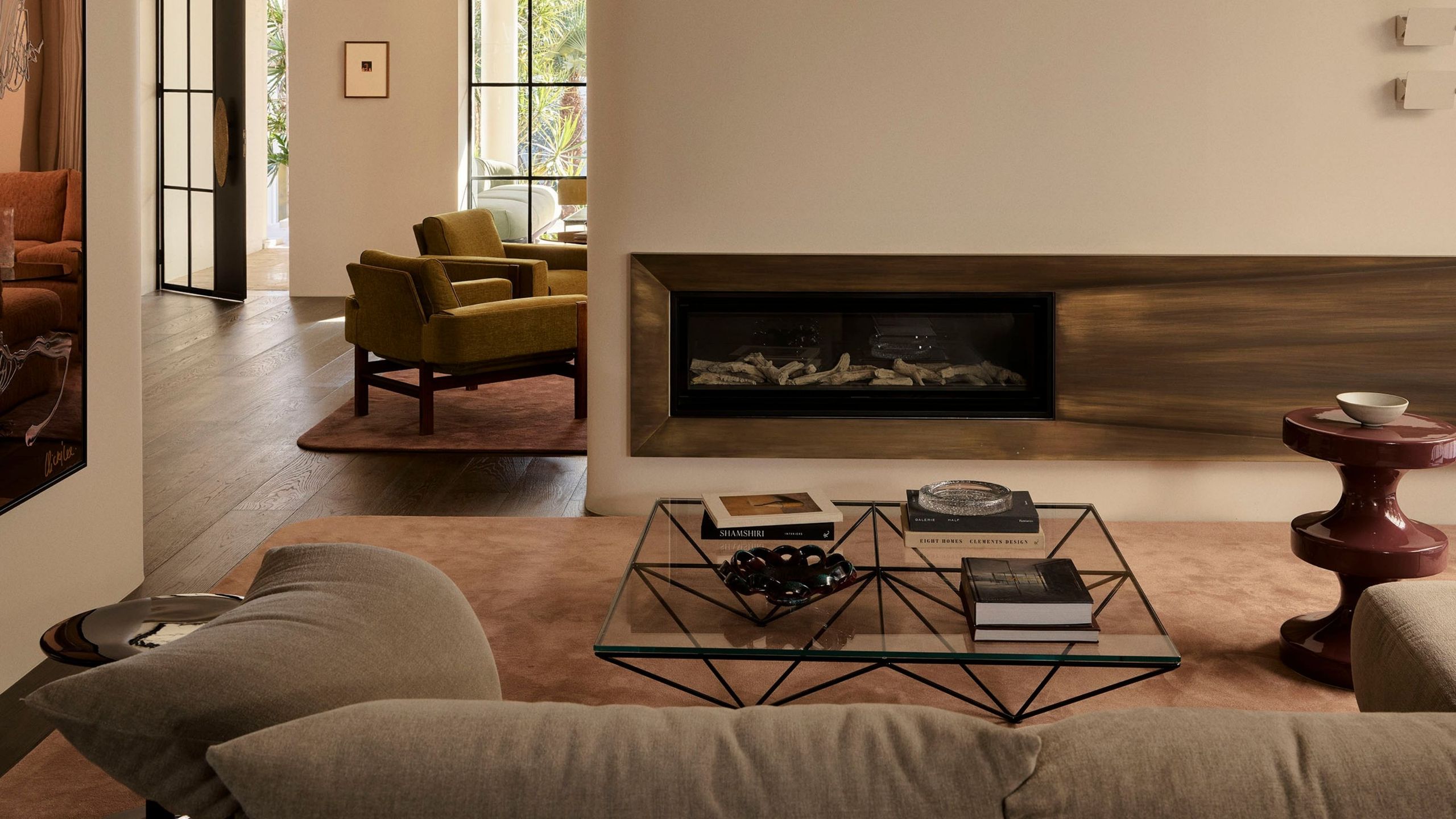
As someone who studied fine art in university, I find it especially intriguing how color is defined throughout history. The reds and yellows used in the earliest cave drawings, the blues dotted through ancient temples and Renaissance paintings, and the golds and purples of kingdoms past. Slowly, certain hues and color pairings started to signify power, family names, and emotional meaning. And many of these ancient color pairings remain key combinations in contemporary interiors.
Today’s color trends are heavily invested in self-expression, identity, and well-being. And drawing inspiration from historical references builds a palette that is story-rich and style-sure. For instance, red-and-white, silver-and-gold, and blue-and-yellow are some of the oldest color combinations, yet we’ve seen each of these pairings in modern trends lately. They take on a fresh identity while retaining their historical influence.
A space can feel quite elevated and luxurious when there is a deeper story behind the palette, especially when they connect us to human history. Homes from centuries ago may have donned the same colors you’ve just picked for your living room, so why do they still resonate? Below, I’ve explored three of these ancient color pairings and how they’ve shaped the way we decorate with color today.

1. Red and White

The deep red walls are striking, but the off-white textiles calm it down.
(Image credit: Rett Peek. Design: Meet West)
First, and perhaps the most ancient color pairings, is red and white. Red was often made from red ochre, a natural clay, while white was made from chalk, making these pigments some of the earliest used for art, dyes, and decoration.
However, red-and-white evolved in other applications as well. “In Renaissance Florence, art was one of the most significant symbols of power, and no material conveyed this better than Porphyry (a purple-red igneous rock),” Livingetc’s design writer Maya Glantz, and an art history major, tells me.
“The most expensive and desirable marble of the time, Porphyry was a favorite of the Medici family, as shown through the grand tomb made almost entirely out of the material found in the Medici Chapel,” she explains. More often than not, you would see this stone mixed with other stones, often lighter in color, such as the still-popular Carrara marble. The combination helped balance out the intensity of the deep red color but also served a practical purpose.
As one of the hardest, most brittle stones, Porphyry was notoriously hard to carve, unlike the far softer Carrara variety. Because of this, “you’ll often find Porphyry used to form the structural elements of a tomb, like the base or columns, while the more intricate details will be made out of the bright, white marble,” adds Maya. The combination signaled wealth, power, and luxury, an idea we can carry into how we use the colors in our homes today.
What makes red-and-white so enduring as a color pairing is that it taps into one of our most instinctive forms of contrast in design. Red brings warmth, energy, and confidence, while white creates a sense of calm and clarity. Together, they feel balanced without losing their sense of character.

While an impressive mix of stones, this bathroom doesn’t feel like it’s shouting. The red and white balance each other.
(Image credit: Brad Knipstein. Design: Sabah Mansoor Design)
What’s most interesting about the duo is that while red gets most of the attention, white does just as much of the work. “It acts as a visual pause, allowing stronger colors to breathe and preventing them from feeling overwhelming,” says interior color expert Fiona de Lys. In many ways, it’s the balance between the two that continues to make the pairing feel relevant today — high contrast rooms can read as very luxurious with the right balance.
Red has enjoyed a huge revival in recent years, thanks in part to the popularity of the ‘Unexpected Red’ theory, which promotes confidence and the transformative power of using small doses of bold colors. Yet, we’re also seeing a return to nostalgic decorating. “Red-and-white stripes have become increasingly popular, appearing on everything from upholstery and lampshades to walls and ceilings,” adds Fiona. “There’s something optimistic about the combination that feels familiar, but not old-fashioned.”
The key to decorating with red and white is deciding whether you want the red to whisper or shout. For instance, a beautiful Rosso Levanto marble in an off-white or cream room would elegantly call to traditional uses of the pairing, while providing a playful pop of color. Red and white together have a nostalgic quality that feels both playful and familiar, but when used thoughtfully, they can also feel incredibly sophisticated.

Ferm Living
Newel Modular Candle Holder, Set of 4

Westwing
Reversible Throw Cang with Fringes

Cult Furniture
Briar Table Lamp in Dark Red Marble and Natural Travertine
Fiona de Lys is a UK-based interior color expert with English-Italian heritage. In her work, Fiona strives to unite the relationship between light, color, and history when designing a space. Her heritage is part of the influence that inspired her to explore the roles of identity and history in developing a personal dialogue with color. Now she works as an industry-recognized color consultant in the UK and overseas, and partners with the British Institute of Interior Design (BIID). Plus, she created the Delysian Color System for her color consultancy service.
2. Silver and Gold

Why not go for a bold application of this duo? It makes for a memorable, yet timeless space.
(Image credit: Omer Ozturk Interiors)
Next up, silver and gold. It might not be your typical ‘color’ pairing, but unlike many changing trends, metallic finishes never truly disappear. And if you’ve ever visited a place like Versailles or viewed medieval armory and decor, it’s clear that mixing metals has long been a luxurious taste.
“I think gold and silver have endured because they’re tied to something far more timeless than interior design trends: light itself,” says Fiona. “Metallic surfaces interact with light in ways that paint and textiles simply cannot replicate.”
Gold brings warmth and softness, while silver has a cooler, cleaner quality. Together, they create contrast, depth, and movement, which is why they continue to feel relevant regardless of changing trends.
That said, “They evolve with changing tastes,” adds Fiona. What was once expressed through elaborate gilding and ornamentation might now appear as a brushed brass tap or chrome decor, but the appeal remains the same.

Even the gray of this marble hints at a silver color against the gold cabinetry.
(Image credit: Studio DB)
So, how do you bring this ancient color pairing into interiors? Well, design schemes like a mixed-metal kitchen are very popular, and you don’t have to be strict with the pairing, as long as the essence is there. “Mixing metals like warm brass and gilded finishes with cooler chrome, nickel, and silver tones creates spaces that feel layered, personal, and collected over time,” says Fiona. It feels less decorated and far more authentic to the way people actually live — probably the reason silver and gold have lasted through history.
When mixing metals, the most interesting spaces tend to have one dominant metal, with the second introduced more sparingly to create contrast and balance. “I also think the finish matters just as much as the color itself,” adds Fiona. “A brushed brass surface feels completely different from polished gold, just as aged silver creates a very different atmosphere from reflective chrome. When layering different finishes and patinas, the space feels far more collected and natural.”
The aim isn’t to create a space as lavish as centuries-old palaces and castles, but for silver and gold to work together to create depth and character.

John Lewis
Akani Table Lamp


Pottery Barn UK
Brass-Footed Bowl
3. Blue and Yellow

It’s a striking color combination, but it doesn’t feel like it’s shouting.
(Image credit: DePasquale Maffini)
And lastly, blue and yellow are a deeply historical color combination. The duo appears in the ornamentation of ancient religious buildings, paintings, and tapestries. And it makes sense, as color theory and the creation of the color wheel render these two shades complementary, meaning they balance the eye’s receptors. “When we create this same visual relationship, there’s something about it that feels immediately familiar with blue and yellow,” says Fiona.
As mentioned, long before synthetic paints, people used naturally occurring pigments from ochre, chalk, and lime. Apart from fine art, all the iconic Greek, Roman, or Egyptian ruins would have been painted in rich yellows and blues (amongst other colors).
Blue specifically has an incredibly rich history. A bold, yet soft shade of blue, Egyptian blue, is widely regarded as the world’s oldest synthetic pigment. As time went on, blues became increasingly expensive to create, so those that were extra vibrant often stood out as the most expensive-looking blues when used in paintings and textiles.

It’s not quite Egyptian blue and yellow, but it hints at that historical reference.
(Image credit: Hauvette & Madani)
Today, blue and yellow can be used in a myriad of ways. For instance, right now, we are seeing an influx of decorating with teal, and when paired with a yellow-based orange, this more modern combination can feel just as historically inspired.
But if you want something slightly more traditional in the way of ancient color pairings, why not try using a bold, Ultra Azure blue? When used in moderation, these blues make quite the statement. Pair them with a soft butter yellow or cozy ochre, and your space will be as timeless as it is colorful.

Pop Pot
Poppea M Bue Amphora

TCS Studio
Otto Pouffe Duro Velvet Crema

M&S
Rechargeable Ceramic Tile Table Lamp
“Part of why color persists through time is that we recognize the value of tradition, stability, and status,” says Fiona. 70s-inspired color palettes recently had a resurgence, but this year, perhaps it’s time to dig deeper into the history of color for some fresh inspiration.
For endless ideas on how to use color in your home, be sure to subscribe to the Livingetc newsletter.
