

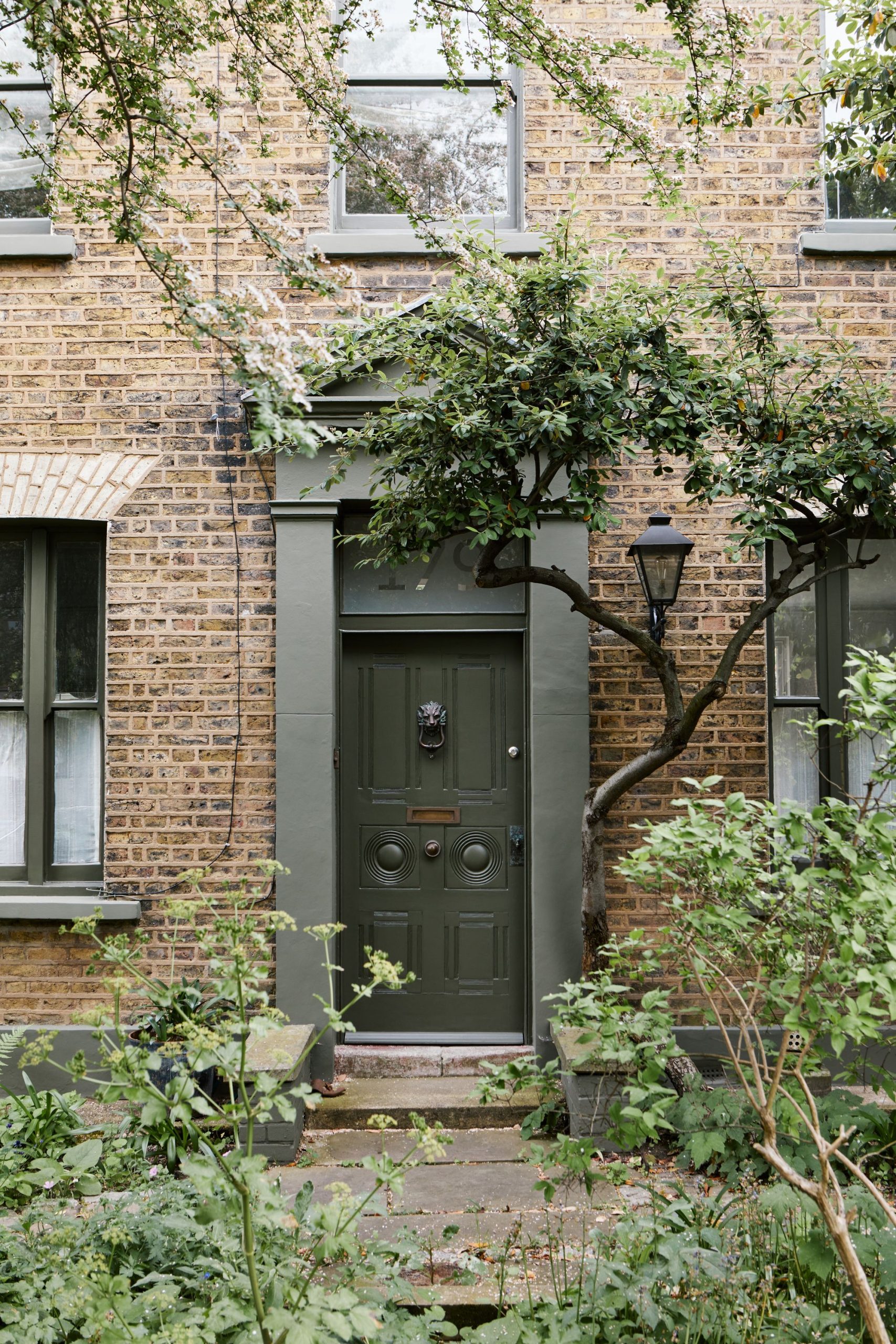
For obvious reasons, the color of your front door leaves quite an impression. A bright, letterbox red shows a bold personality, while a light blue brings classic charm. And while choosing a paint for your front door may not be your first thought, it should definitely not be an afterthought. The wrong shade can detract from the overall look of your exterior, giving neighbors and guests the wrong impression.
Front door color psychology explains how this choice can affect your home’s curb appeal. Basically, shades convey different emotions, atmospheres, and tastes — all of which offer insight into the home within. So, choosing the wrong front door color not only clashes with the home’s facade but can also negatively impact its overall vibe.
The goal is to select a front door color that teases your style, blends with the architecture and natural surroundings, and maybe even taps into trends. So, take a look at your front door — what does it say about you? Have I opened a can of worms? Well, to make things easier, I’ve asked designers to identify front door colors to avoid and, importantly, what shades to choose instead.

1. Bold Blues

INSTEAD: Opt for a soft or natural blue that harmonizes with your home’s surroundings. Myland’s Beaufort Gardens teal paint color, pictured here, is a stylish and serene choice.
(Image credit: Mylands)
Bold, royal blues may be a popular interior color trend, but such a stark shade might not be the best choice for your exterior door. As Dominic Myland, CEO of Myland Paint Company, says, “We would generally recommend steering clear of colors that will clash with the facade of your home.” A high-contrast, electric blue can easily distract from the architecture and natural environment, creating an abrasive first impression.
But, of course, not all blue paint colors should be avoided on the front door. Dominic says, “If you’re unsure which shade would work best, fresh blues like Beaufort Gardens™ No.212 or Rain JB.03 often work well with brick, stone, and other exterior materials.”
“The geographical location of your home can provide plenty of inspiration for the shade of your front door, helping your home to feel very harmonious within its surroundings,” adds Ruth Mottershead, creative director at Little Greene Paint.
In coastal areas, reflect the serene, restful setting with soft, pale blues to evoke a classic, but modern coastal aesthetic. “Our muted Celestial Blue is a particularly timeless shade of blue, a popular choice for exteriors,” says Ruth. Or, if your home is based in a country setting, such as a rural farmhouse, look to the natural environment for inspiration. There are so many shades of blue and light blue paint that would look beautiful on a front door.

Ruth Mottershead is a color expert and the creative director at Little Greene Paint Company. At Little Greene, she has pioneered the way the brand thinks about color and pattern, creating new palettes, new pigments, and becoming the force behind sustainable paint offshoot Re: mix. She is also a regular contributor to Livingetc.
2. Stark Black

INSTEAD: Dark greens and tonal combinations can be visually striking and natural at the same time. This Messel shade by Mylands feel elevated yet classic.
(Image credit: Mylands)
It might seem surprising to see black on the list of front door colors to avoid — isn’t black a classic? Well, it really comes down to the problem of creating stark contrast. For many homes, a jet-black front door can feel a touch jarring. Instead, look for a deep neutral that has earthy undertones for a more relaxed contrast.
“Many traditional and modern homes feature warm red or orange-toned brick,” explains Ruth. Rather than black, dark, muted green color trends are a fabulous choice to accompany a red-brick exterior, creating a beautiful, complementary contrast that still feels natural.
If the bricks on your home exterior are softer and more yellowish in tone, “consider a classic, muted sage,” says Ruth. Many older properties feature light stone masonry and traditional limestone on their exterior. “Classic neutrals with warm, earthy undertones are a timeless choice here,” adds Ruth. Or opt for a combination of earthy color palettes on the door and your exterior trim color for a stylish, tonal drench.
Farrow & Ball’s Studio Green brings timeless drama, while a softer shade, like Dulux’s Green Glade, provides a nice contrast. And if your heart is set on a black front door, there are definitely stylish ways to incorporate this look. Perhaps an ultra-matte finish would bring a natural texture, or a high-gloss finish for more modern homes.
3. Too Bright Red Tones

INSTEAD: Use bold colors that match your home’s architectural style, exterior materials, and your personal style. The yellow undertones in Mylands’ Lolly Pop orange look wonderful on this exterior.
(Image credit: Mylands)
“With period homes, selecting a bolder color for your front door can often add a surprising, contemporary twist,” says Ruth. A pop of unexpected red is definitely a hot choice for interiors and makes for a very eye-catching front door. But there are certain shades to steer clear of and others that will feel more timeless.
Where a true, letterbox red can feel slightly dated these days, a red with a bit more depth can make a front door pop. “For those looking to make more of a statement, Arts Club™ No.281, a deep red, lends a timeless, characterful feel to the front of your house,” says Dominic. Oxblood color trends create an elevated exterior and will blend more harmoniously with natural surroundings.
Or you could swing the other direction for a zingier front door. “Yellow-based hues typically pair well with traditional stone, due to the related warm undertones,” Ruth shares. A stylish coral or orange introduces an eye-catching color that feels more unexpected than a letterbox red.
Or, try a red-adjacent color. “An elegant pink like Pink Slip is a beautiful accompaniment to gold accessories to create an inviting entrance,” says Ruth. There are still plenty of ways to make red hues work on the front door.
Here’s to a front door color that will generate the good kind of neighborhood gossip and instantly elevate your home’s curb appeal.
For more inspiration, be sure to subscribe to the Livingetc newsletter.
