

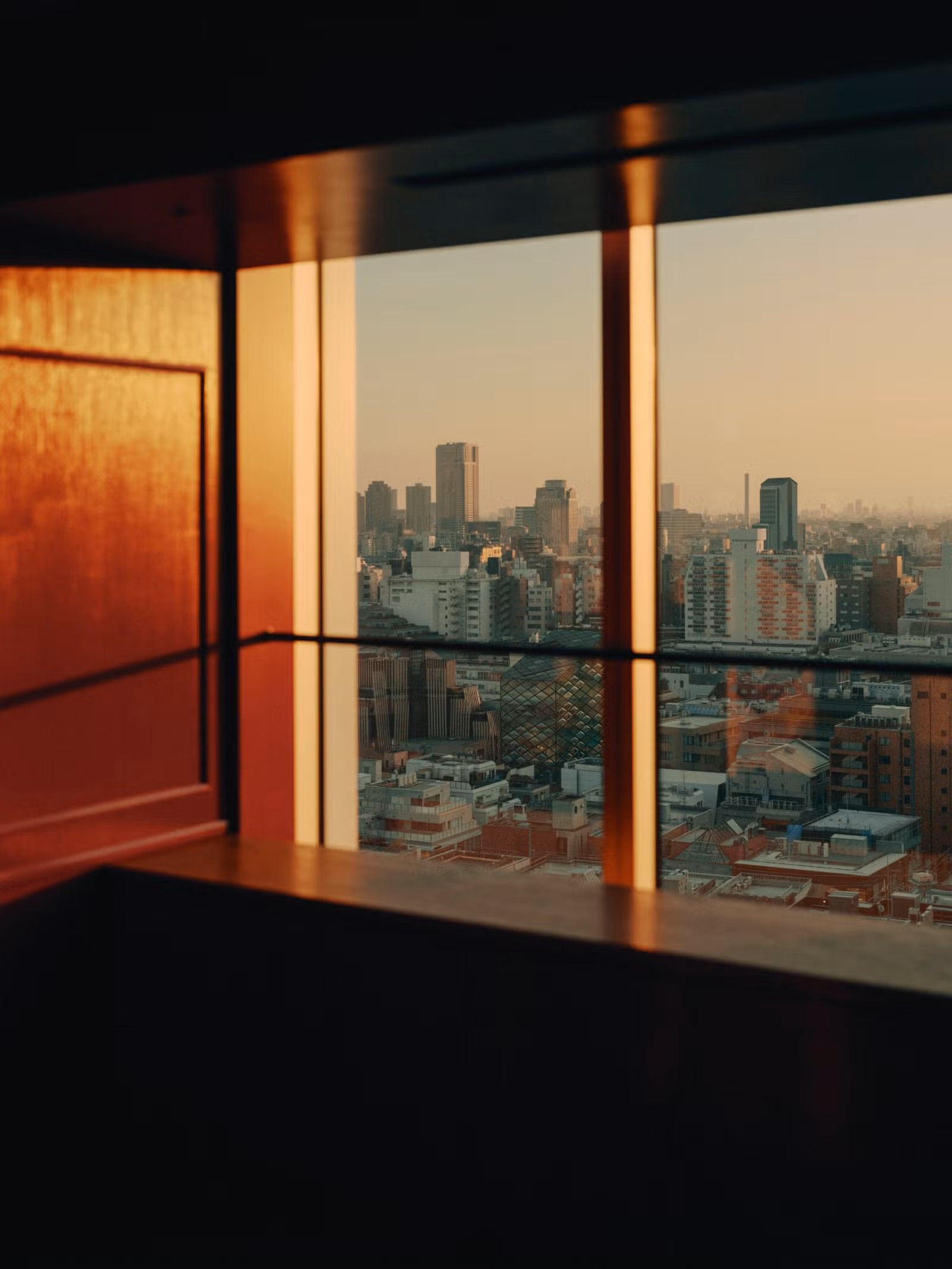
Somewhere between the enduring romance and charm of Sakura (“the cherry blossom season”), the natural spring-powered, immersive thermal experience of onsen, and a growing community of designers, artisans, and makers looking back to the country’s storied heritage to expand its creative reach further, Japan has gained fresh appeal for globetrotters interested in sights, traditions, and artistry packed with plenty of offline authenticity.
Officially inaugurated last month, the launch of Soho House Tokyo, which marks the cult group’s expansion into Japan, confirms what we at Livingetc have been saying for a long time: that the hypnotic, although bittersweet, portrayal given of the city by Sofia Coppola’s Lost in Translation isn’t the sole thing to blame for the metropolis’ growing popularity. Nor are Japan’s spellbinding landscapes and culinary delights the only reasons for its rise and rise: its nature-conscious, beautifully pared-back approach to interiors, the arts, and craftsmanship more generally is what convinces creatively inclined and homeware-obsessed travelers alike to flock to its leafy villages and metropolises.
A de facto burgeoning design capital, Tokyo will likely appear on most of your most stylish friends’ hot lists. Thanks to Soho House Tokyo, now they won’t even think about it twice when it comes to picking where they’ll be sleeping. Note down our predictions: this will become the premium example to draw from for a home environment that feels as rooted in an appreciation for the past and peaceful as it is daring, unexpected, and forward-thinking.

Enter Soho House Tokyo, Where “East Meets West” — And Past, Present, and Future Merge

Plush velvet banquettes, checkered floors, and warm lighting set the scene at the club’s House Brasserie.
(Image credit: Edvinas Bruzas. Courtesy of Soho House)
Boasting 42 bedrooms, a rooftop, an infinity-style pool, and a wellness studio across four floors, and including two exclusive dining destinations, Soho House Tokyo calls the buzzy Aoyama district, near the lush Omotesando — known as the ‘Champs Élysées of Tokyo’ — its home. It is the 50th House of the pioneering private members’ club concept to open in some of the most exciting destinations across the globe.
Dreamed up by the portfolio’s in-house design team under the leadership of senior designer Domhnall Nolan, the creator of London’s surreally cinematic queer clubhouse Roses of Elagabalus, the address keeps the cosmopolitan feel of all Soho House retreats at its heart by reinterpreting Japanese-style heritage furniture, detailing, and materials through a distinctively British lens.

Thriving plants, washi paper surfaces, and textured woodwork turn Soho House Tokyo into a sensory journey spanning centuries of knowledge and craftsmanship.
(Image credit: Edvinas Bruzas. Courtesy of Soho House)
Upon entering, guests’ Japanese fantasy turns into reality: washi paper-clad walls and softly glowing, amber-hued ambient lighting instantly envelop visitors in a soothing, golden aura, while the fashion addicted among us can find joy in Soho House Tokyo’s bespoke retail experience — expect a curated selection of vinyl records available to purchase, alongside a UNIQLO-powered vending machine that helps you collect the minimal-chic aesthetic widely sported by locals for when you’re back in your city.
These are just a handful of the interior inclusions that make Soho House Tokyo’s geography and time-traveling aesthetic tangible in its layout: finding a way to lean into Japan’s rich culture and artisanal arts and craft, alongside the high-tech futurism that’s synonymous with the city itself, was important for the London-founded lifestyle brand, the team explains.
The finished project raises the bar for homes and hospitality destinations that can’t just settle for one — present or past, traditional or modern, minimal or maximalist — but instead fuse these contrasting worlds into an inspiring, cohesive look that embraces style beyond trends by…
1. Balancing “Japan’s Minimalist Perfectionism with Soho House’s Maximal Approach to Color, Pattern, and Form”

Inspired by the ongoing vinyl record revival, the bespoke retail area of Soho House Tokyo immerses guests in the city’s pulsating music scene and its many cross-cultural influences.
(Image credit: Edvinas Bruzas. Courtesy of Soho House)
“One of the most important things when designing Soho House Tokyo was that it had to have a sensitivity and respect to Japan’s longstanding visual culture,” Nolan shares over email. Being Soho House Tokyo the first Soho House in Japan, “it needed to be very special,” he adds.
From the get-go, Nolan knew the idea was “to blend that notable Japanese minimalist perfectionism with Soho House’s more maximal approach to color, pattern, and form”, three of the signature traits of the Soho Home look. British eccentricity is cautiously hinted at in the eye-catching patterned cabinetry of the lounging areas, and the tight tilework, recurring wood elements, and the vibrant palette of the stay’s Asian-infused, country-chic bedrooms and suites.
Checkered fabrics and quirky vintage finds sourced from all over Europe are integrated seamlessly into the largest accommodations available on-site, bridging the club’s Western roots with the Oriental sensibility of its hosting capital.
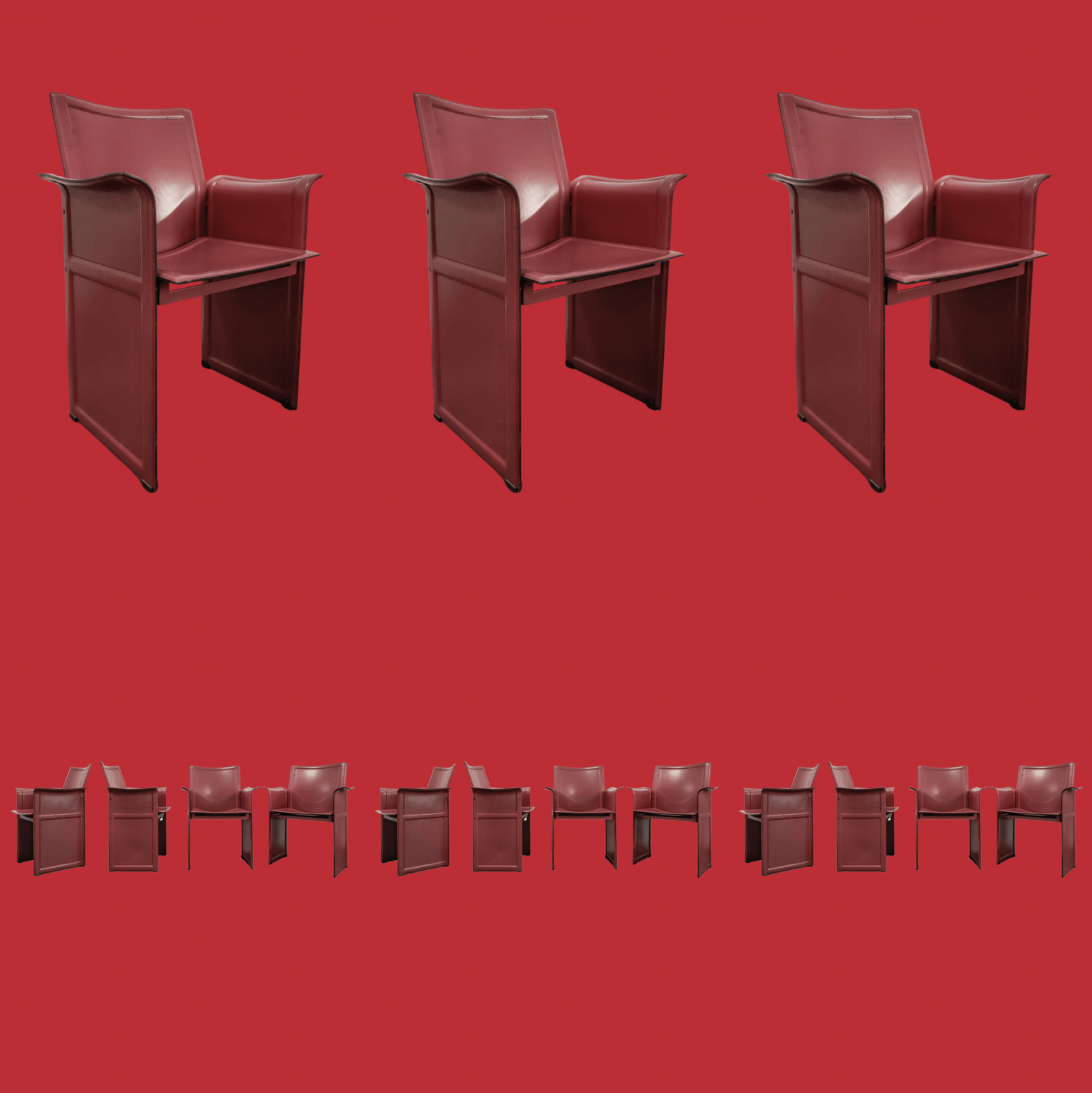
1stDibs
Leather Dining Chairs by Tito Agnoli for Matteo Grassi, Model Korium, Italy 1979
2. Bringing Material Knowledge and Craft to the Foreground

From staircases and passageways all the way into the layeredly decorated bedrooms, materials are the real protagonists at Soho House Tokyo.
(Image credit: Edvinas Bruzas. Courtesy of Soho House)
Looking around, you’ll spot the mid-century furniture that’s an undiscussed must of every Soho House paired with Japanese Art Deco ceiling lamps, and a vibrant collection of paintings, sculptures, and installations developed by 40 artists born, based, or trained in Japan, as well as by creatives belonging to the Japanese diaspora.
Even in the case of the artworks, though, which dot anything from the club’s main F&B destinations — the House Kitchen and the House Brasserie — and bar to the lift lobby, the library, and the most unexpected nooks throughout the property, it’s the tactile, organic materials that lend them a backdrop that makes each piece stand out.

The cocooning, retro-inspired library space at Soho House Tokyo, decorated with 1970s modular soft seating and a bold collection of books and artworks.
(Image credit: Soho House)
Nolan stumbled upon a plethora of motifs and patterns while visiting artisan workshops across Japan in the research phase of the project, which took five years to complete, some of which he successfully wove into the final Soho House Tokyo design. I ask him to explain which feels most emblematic of the address’s fusion of Western and Eastern traditions.
Japanese traditional urushi lacquer, which relies on natural resin to give surfaces a glossy, precious effect, appears to be the one: “I was lucky enough to visit Makino Urushi in rural Kyoto to see their workshop and see the possibilities of what they can do with this type of finish,” the designer says, adding that, in the country, it’s widely used in small tableware and jewelry items.

Gallery Direct
Retro Armchair

H&M
Large Tufted Wool Wall Art


A detail of one of Soho House Tokyo’s Extra Large Rooms, featuring a tapestry crafted in a traditional technique from old kimonos.
(Image credit: Edvinas Bruzas. Courtesy of Soho House)
He made it one of the recurring features that guides guests across the different environments of Soho House Tokyo, giving each a ‘jewel box’ effect. “A dying art in Japan, it felt really important to showcase it to as many people in Soho House Tokyo as possible and capture the artistic potential that lies in it,” Nolan explains.
They also worked with artisans from Taitō’s Public Crafts, a platform dedicated to the reintroduction and preservation of heritage materials from Japan, to make Sakiori woven blankets and tapestries using old kimonos — “a storied technique that, although not typically implemented in this context, I knew I had to bring into the scheme, where it’s now a key focus of the guest bedrooms”. Both show how, rather than looking lived or even passé, when inserted carefully, ancestral elements can imbue your space with soul, character, and movement.
3. Using Light and Color to Make Rooms Feel “Warm, Eclectic, and Reverent”

It’s not a Soho House without a rooftop pool, and Soho House Tokyo steps in with the views.
(Image credit: Soho House)
Soho House Tokyo’s genre-defying vibe takes the quirkiness and exuberance of maximalism and the peaceful essence of Japan’s Wabi-sabi principles and merges them into one. While antique pieces and shimmering surfaces may be easier to spot across the club, there’s one element that every hospitality design says shouldn’t be overlooked in projects of this kind, along with choosing an appropriate palette: light.
“Soho House Tokyo carries the vibrancy of Soho House’s signature ambient lighting (achieved, in this case, using predominantly bespoke Japanese washi paper fixtures),” Nolan explains. The ambiance is informed by the designer’s extensive digging into Japanese artistry, where he found muted earthy colors, soft lighting, and handmade details to be prominent across decades.

The amber light of Soho House Tokyo injects its 13th and 14th-floor spaces with a sense of instant familiarity, coziness, and warmth.
(Image credit: Soho House)
Demonstrating how European and British vintage furniture can be juxtaposed with Japanese decor for a scheme that feels inherently daring, “Soho House Tokyo is warm, reverent, and eclectic,” the designer adds.
One under-the-radar you should be on the lookout for? “The ceiling of the main club space on level 13 is modeled after Japanese traditional Tatami flooring,” he reveals. “Although it’s not an exact replication, it looks at the original materials and proportions and plays with them, resulting in a wonderful blend of an unconventional design detail.”
Discover Soho House Tokyo.
Got the private members’ club look and now want to get on with the social perks? See inside the Soho House alternatives currently redefining exclusivity and community in the British capital and beyond, or head to our lifestyle pages for a thought-provoking exploration of travel, leisure, and culture.
